
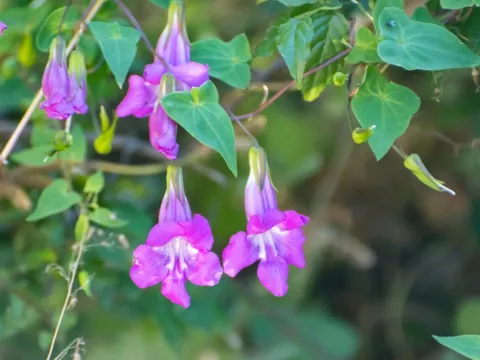
Maurandya
Maurandya Ortega
Sowing Maurandya seeds typically begins in late February or early March indoors. The seeds should be sown in trays filled with a light, well-draining seed-starting mix, ensuring they are only lightly covered with soil.
What the section contains

Maurandya
A consistent temperature between 20-22 degrees Celsius is essential for optimal germination. Keeping the growing medium moist and providing bright, indirect light will help the seedlings emerge within two to three weeks.
Pricking out the seedlings into individual pots is recommended once the first pair of true leaves has fully developed. This process encourages a strong root system, which is crucial for subsequent transplanting.
Transplanting the young plants into the garden should only take place after the danger of frost has passed. Warm soil and stable night temperatures are key for the plants to establish themselves quickly.
Spacing the plants adequately is important to ensure good airflow, which helps prevent excessive humidity build-up around the climbing stems during the peak of summer.
Maurandya is an elegant climbing plant belonging to the Plantaginaceae family. Originally native to the mountainous regions of Mexico and the Southwestern United States, it is widely prized for its ornamental value.
The plant thrives in fertile, well-aerated, and slightly acidic to neutral soils. In containers, a high-quality potting mix combined with perlite ensures proper drainage and prevents waterlogged roots.
Full sun is the ideal environment for Maurandya to bloom profusely. While it can tolerate partial shade, the density of foliage and the quantity of flowers will decrease significantly in lower light conditions.
Regular but moderate watering is required throughout the growing season. The plant should never be left sitting in water, as this can easily lead to root rot and other physiological issues.
As a natural climber, Maurandya requires sturdy supports such as trellises, wires, or netting. Its leaf stalks act as tendrils, twisting firmly around supports to facilitate vertical growth.
Spider mites are the most significant pest concern, especially during hot and dry weather conditions. They feed on the sap of the leaves, causing stippling and eventual leaf drop if left uncontrolled.
Aphids can also colonize the succulent stems and developing buds, potentially stunting growth. Prompt treatment with horticultural soap or systemic insecticides can manage these infestations effectively.
Powdery mildew is a common fungal threat when plants are grown in conditions with poor circulation and high humidity. Improving spacing and airflow is the best preventative measure against this pathogen.
Root rot occurs primarily due to overwatering or poorly draining soil. To prevent this, ensure that containers have ample drainage holes and that the soil surface dries slightly between watering events.
Overall plant health depends on proper nutrition; potassium-deficient plants are often more susceptible to both insect attacks and fungal infections. Consistent fertilization promotes resilience and vigor.