
Maurandella antirrhiniflora
Maurandella antirrhiniflora
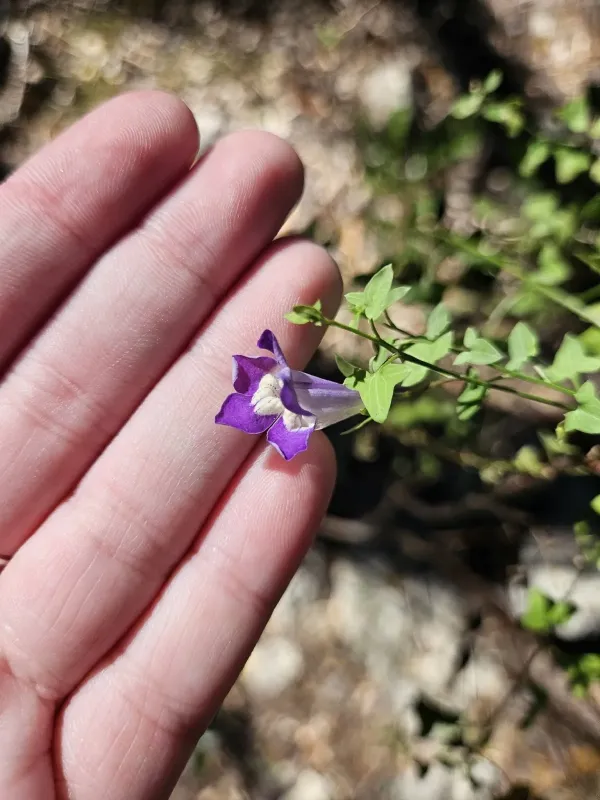
Description
Sowing dates
Sowing seeds of this culture in temperate climates is recommended for late February or early March to obtain healthy seedlings. Seeds should be pre-soaked to improve germination before being sown in a light, nutrient-rich substrate.
A stable temperature range of 20 to 22 degrees Celsius is necessary for germination. It is crucial to maintain moderate soil moisture, as waterlogging can lead to fungal infections in the seedlings.
Seedlings should be pricked out when the first pair of true leaves appears. Since the plant is sensitive to root system damage, the use of individual peat pots is highly recommended.
Transplanting to open ground should only be performed after the risk of night frost has passed. For successful adaptation in the garden, a two-week hardening-off period is recommended.
Maurandella responds well to gradual transplanting, provided that caution is exercised when moving the root ball into the planting hole.
Growing requirements
Maurandella antirrhiniflora belongs to the Plantaginaceae family and is an elegant herbaceous vine originating from the arid regions of North America. In the wild, it grows in canyons and on rocky slopes.
This culture prefers sunny spots with protection from strong winds. Direct sunlight contributes to more intense flowering and helps maintain a compact shape for the plant.
The soil for cultivation must have excellent drainage properties. Standing water is a critical factor and can be fatal to the plant's root system, so a layer of gravel is essential for heavy soils.
The optimal soil pH level is neutral to slightly alkaline. Regular application of complex mineral fertilizers is required only during the active growing season.
For proper development, the vine needs a vertical support structure, which it uses to climb by gripping protrusions or trellises with its petioles.
Main diseases and pests
The primary enemy of the culture in both indoor and outdoor environments is the spider mite, which multiplies rapidly in dry air. It can be identified by a characteristic thin webbing on the undersides of the leaves.
In conditions of high air and soil humidity, there is a high risk of powdery mildew infection. The disease manifests as a whitish coating on the foliage and requires immediate removal of affected areas.
Root rots are the consequence of improper irrigation practices and the use of poor-quality substrate. Prevention consists of moisture control and soil treatment with fungicides.
Aphids can also damage young shoots of Maurandella by sucking sap and deforming leaves. If aphid colonies are detected, systemic insecticides should be applied.
- Regular plant inspection.
- Humidity control.
- Timely sanitary pruning.
- Maintaining spacing between plants.