
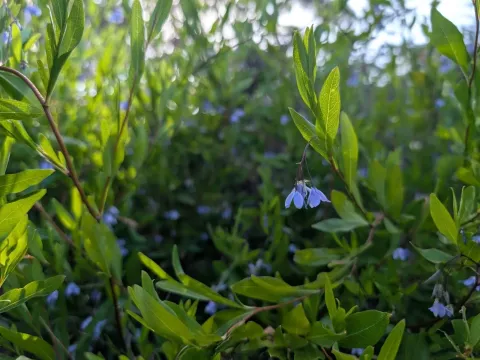
Sollya
Sollya
Sollya is a genus of evergreen shrubs and climbers belonging to the Pittosporaceae family. The most widely cultivated species is Sollya heterophylla, frequently referred to as the Australian Bluebell due to its delicate, bell-shaped flowers.
What the section contains
Sollya
Native to Western Australia, this plant thrives in woodland and shrubland environments. It is highly valued in horticulture for its ornamental appearance, suitable for container gardening or sheltered garden walls in mild climates.
The plant requires well-draining, slightly acidic to neutral soil to prosper. Proper drainage is absolutely essential, as the species is highly susceptible to root rot when exposed to consistently waterlogged conditions.
Sollya prefers bright, indirect sunlight or partial shade. While it can tolerate some sun, intense mid-day heat can stress the foliage, so positioning in a sheltered spot is recommended for optimal plant health.
In terms of temperature, it is not frost-hardy. Cultivation in colder regions necessitates keeping the plant in a pot so it can be moved to a conservatory or a frost-free, bright room during winter months.
The primary concern for Sollya cultivators is the development of root rot, often triggered by overwatering or the use of heavy, non-porous potting media.
Insect pests such as mealybugs and scale insects represent the most common biological threat. These pests tend to colonize stems and leaf axils, draining sap and hindering the growth of the shrub.
Spider mites can become a significant issue, particularly when the ambient humidity is too low, such as during indoor cultivation or in overheated greenhouse environments.
Effective management involves regular scouting for early signs of infestation and the application of appropriate horticultural oils or systemic insecticides if necessary.
Nutritional imbalances can also occur, manifesting as leaf chlorosis. Ensuring the soil pH remains within the preferred range is vital for the plant to properly absorb essential micronutrients.