
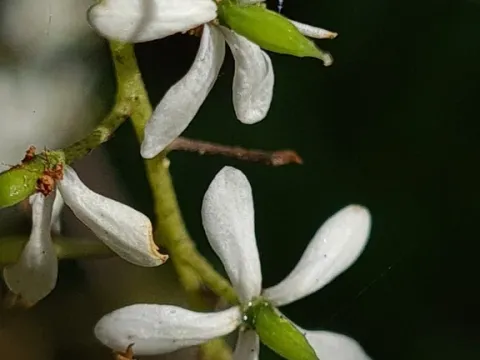
Bursaria
Bursaria Cav.
Bursaria (Latin: Bursaria) is a genus of flowering plants belonging to the family Pittosporaceae. Originating from Australia, these resilient shrubs or small trees are valued for their ecological significance and robust nature.
What the section contains

Bursaria
The plant thrives in well-drained soil types ranging from loamy to sandy. It is highly adaptable to various soil pH levels, provided the drainage is efficient, as standing water can be detrimental to its root system.
Bursaria is recognized for its significant drought tolerance once established, making it an excellent choice for sustainable landscaping. It performs best in full sun but can tolerate partial shade, which may impact flowering intensity.
Cultivation practices involve regular pruning to encourage dense growth, especially when used for hedging. Moderate fertilization during the active growing season can enhance the overall vigor and appearance of the foliage.
Beyond its ornamental use, Bursaria serves as an essential nectar source for native pollinators and beneficial insects. Its adaptability makes it a versatile component in various climatic zones, excluding areas with harsh winters.
Common pests affecting the genus include aphids and scale insects, which typically target the succulent growth. Integrated pest management, focusing on monitoring, is usually sufficient to maintain healthy plants.
Fungal issues such as root rot can occur if the soil remains waterlogged for extended periods. Ensuring proper spacing and airflow between individual plants is the primary strategy for disease prevention.