
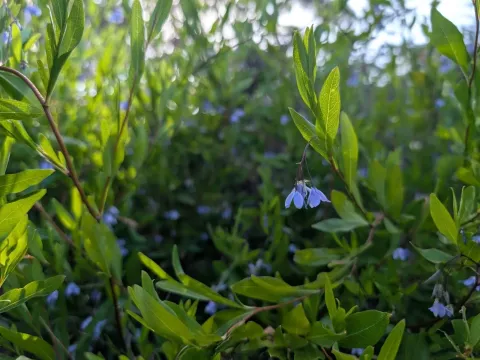
Billardiera
Billardiera Sm.
The propagation of Billardiera is most commonly achieved through seed sowing or stem cuttings. Seeds often require a period of stratification to improve germination rates.
What the section contains

Billardiera
Sowing in a protected environment or greenhouse is typically performed in late winter or early spring, as day length begins to increase.
A light, well-draining substrate rich in organic matter is recommended for sowing to support the rapid development of the seedling's root system.
For vegetative propagation, cuttings should be taken from young, healthy shoots during the growing season and rooted under high humidity conditions.
Transplanting to a permanent location should only occur after the risk of frost has passed, as young plants are quite sensitive to low temperatures.
Billardiera belongs to the Pittosporaceae family and is recognized as an evergreen climbing vine native to the Australian continent.
The plant thrives in temperate climates and is not frost-tolerant; therefore, it is best grown as a container plant in regions with colder winters.
For optimal growth, the vine requires a bright location that is shielded from intense midday sun and strong, drying winds.
The soil should be slightly acidic to neutral, loose, and moisture-retentive, while ensuring excellent drainage to prevent waterlogging, which can cause root rot.
Regular watering is essential during the active growing season, though the frequency should be significantly reduced during the winter dormancy period.
The fruits of Billardiera, often referred to as "apple berries," are elongated, juicy berries that change color as they reach maturity.
In their natural habitat, yield is highly dependent on the age of the vine and the presence of native pollinators that ensure successful fruit set.
When grown in greenhouse conditions, yields can be improved through microclimate control and better protection from environmental stressors.
The berries have a pleasant flavor profile, often compared to apples or kiwis, and are popular in local cuisine for fresh consumption or desserts.
Fruiting typically begins a few years after planting, with mature and well-maintained vines providing the highest and most consistent yields.
The primary threats to Billardiera are related to improper moisture management, which frequently leads to fungal pathogens affecting the root system.
Plants grown in greenhouse environments are susceptible to spider mites, which can proliferate rapidly in conditions of low humidity.
Powdery mildew is a common concern in poorly ventilated spaces, making adequate air circulation between plants a critical preventative measure.
Leaf-eating insects may damage young foliage, requiring timely intervention with biological control agents or targeted insecticides.
Preventing chlorosis requires strict monitoring of soil pH and regular applications of micro-nutrients, particularly iron, to maintain healthy foliage.
Harvesting is conducted as the berries reach maturity, indicated by their final color development and a soft texture upon gentle pressure.
It is not recommended to harvest under-ripe berries, as they lack the flavor and aromatic qualities that define the fully ripened fruit.
Harvesting must be performed by hand due to the delicate nature of the fruits, which bruise easily when subjected to mechanical handling.
Post-harvest storage requires a cool, well-ventilated area, as the berries have a relatively short shelf life at room temperatures.
Regular monitoring of the vines during the harvest window is essential, as different species may have specific ripening stages that need to be observed.