
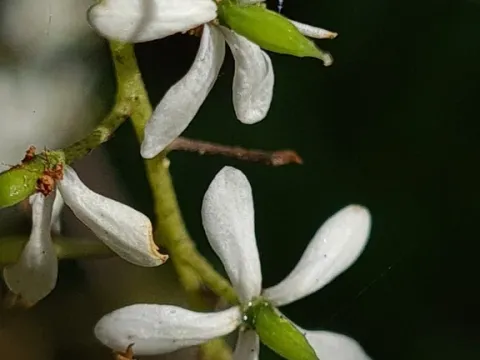
Bursaria
Bursaria
Bursaria is a genus of evergreen shrubs and small trees belonging to the family Pittosporaceae. The most prominent species, Bursaria spinosa, is widely recognized for its robust nature and adaptability to diverse environmental conditions.
What the section contains

Bursaria
Originating from Australia, the plant is naturally distributed across various landscapes including coastal dunes and open forests. Its biological resilience makes it an ideal candidate for cultivation in regions with Mediterranean-like climates.
The plant requires well-drained soil to thrive and exhibits excellent tolerance to both dry spells and moderate frost. It is not demanding regarding soil fertility, making it highly sustainable for low-maintenance landscaping projects.
Agricultural management is straightforward: initial irrigation is necessary to ensure establishment, but once mature, the plant survives on minimal rainfall. Pruning is recommended mainly for aesthetic purposes or to manage the dense, thorny growth habit.
Bursaria is extensively used for creating impenetrable hedges and natural fences. Furthermore, it serves a critical role in local ecosystems by attracting beneficial pollinators during its flowering season, providing significant nectar sources.
The primary horticultural threats to Bursaria include root rot, which typically occurs in compacted or waterlogged soils. Ensuring optimal drainage is the most effective preventative measure against fungal complications.
Pest management focuses on monitoring for scale insects and aphids, which may cluster on new growth. Regular inspections and the application of horticultural oils or systemic treatments effectively mitigate these minor pest issues.