
Scardian cow-wheat
Melampyrum scardicum
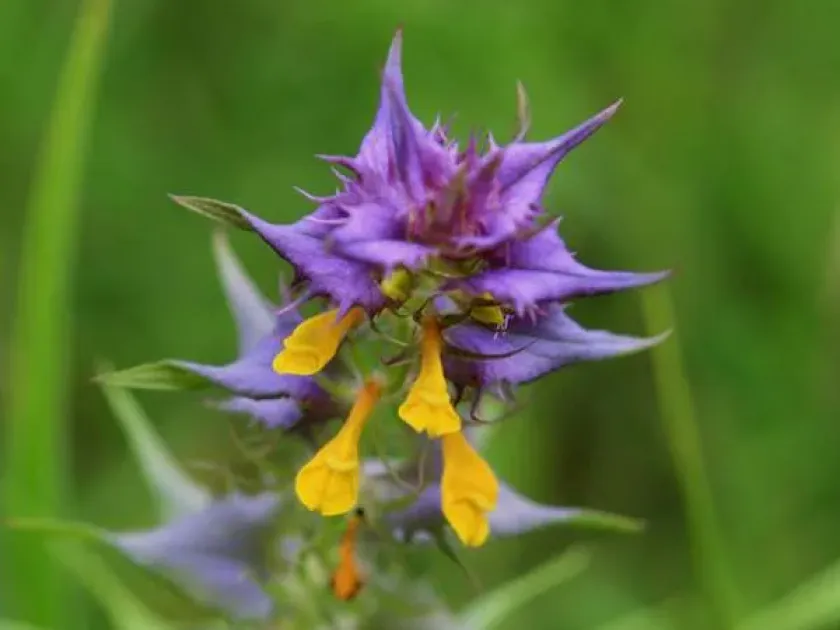
Description
Growing requirements
Scardian cow-wheat (Melampyrum scardicum) is an annual semi-parasitic herbaceous plant belonging to the Orobanchaceae family. Unlike obligate parasites, it performs photosynthesis but relies on host root systems for water and mineral nutrient uptake via specialized organs called haustoria.
The species is endemic to the high-altitude regions of the Balkan Peninsula. It thrives in alpine and subalpine meadows, where it has evolved to withstand low temperatures, rocky soils, and intense solar radiation during the short growing season characteristic of these mountain areas.
Soil requirements for this species are strict, necessitating well-drained, acidic to neutral substrates. The plant is particularly sensitive to waterlogging and compaction of the soil, which can inhibit the establishment of its delicate root system and its interaction with host plants.
Agronomic management is restricted to botanical research and experimental conservation efforts. Because Melampyrum scardicum depends on specific host plants for optimal vigor, successful cultivation requires the presence of compatible flora within the planting medium.
Economic application is essentially non-existent in traditional agriculture. However, the plant is of significant interest in ecological studies and conservation biology, serving as a model species for understanding the evolutionary transitions between autotrophic and parasitic lifestyles in mountain flora.
Main diseases and pests
The main threats to Melampyrum scardicum involve habitat loss due to climate change and the overgrazing of alpine meadows. Pathogen-wise, it is susceptible to root rots caused by various soil-borne fungi when humidity levels exceed natural thresholds.
Pests include various aphid species and specialized lepidopteran larvae that target the flowering stems. These infestations can drastically reduce seed production, threatening the long-term viability of restricted alpine populations.