
Scaly broomrape
Orobanche latisquama
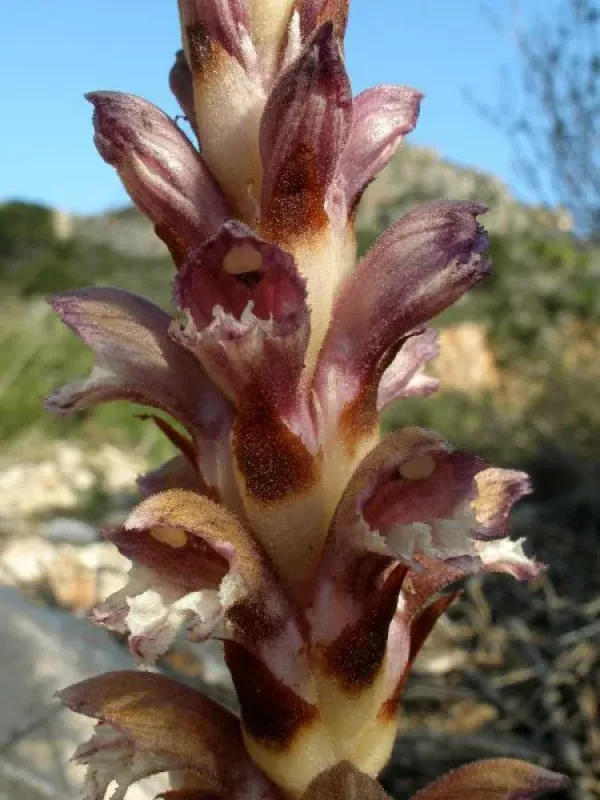
Description
Growing requirements
Scaly broomrape (Orobanche latisquama) is an obligate parasitic plant belonging to the Orobanchaceae family. As it completely lacks chlorophyll, it cannot perform photosynthesis and relies entirely on host plants for its nutritional needs.
The plant attaches itself to the roots of the host using specialized structures called haustoria. These penetrate the host's root system to draw out water, nutrients, and essential organic compounds necessary for the parasite's growth and survival.
The native range of this species is primarily centered in the Mediterranean region and parts of Southwest Europe. It thrives in warm, dry climates and prefers well-drained, sandy soils that facilitate the growth of its subterranean root systems.
A crucial aspect of its biology is the germination trigger: the seeds require specific chemical signals, known as strigolactones, secreted by host roots. Without this signal, the seeds can remain dormant in the soil for over a decade.
Agronomic management requires integrated strategies including long-term crop rotation, the use of resistant crop cultivars, and targeted herbicide applications designed to disrupt the germination cycle of the parasite.
Main diseases and pests
The primary agricultural threat posed by scaly broomrape is its ability to severely deplete the host plant's vital energy, leading to significant yield losses. Infested crops often show stunted growth, reduced vigor, and poor harvest quality.
Natural enemies of this parasite include certain dipteran insects, such as Phytomyza orobanchia. The larvae of this species feed on the broomrape stalks and floral capsules, providing a biological mechanism to control its population spread.
Fungal pathogens, particularly from the Fusarium genus, can infect the broomrape, leading to tissue necrosis and decay. These interactions are subject to research as a form of biological control to mitigate infestation rates in fields.
Dissemination occurs via dust-like seeds that are easily transported by wind, water, or agricultural machinery. A single plant can produce vast numbers of seeds, making containment of an infestation a significant challenge for farmers.
Proactive prevention is essential, including strict adherence to phytosanitary regulations regarding seed sourcing and the thorough cleaning of farm equipment to prevent the cross-contamination of fields with contaminated soil.