
Nothobartsia asperrima
Nothobartsia asperrima
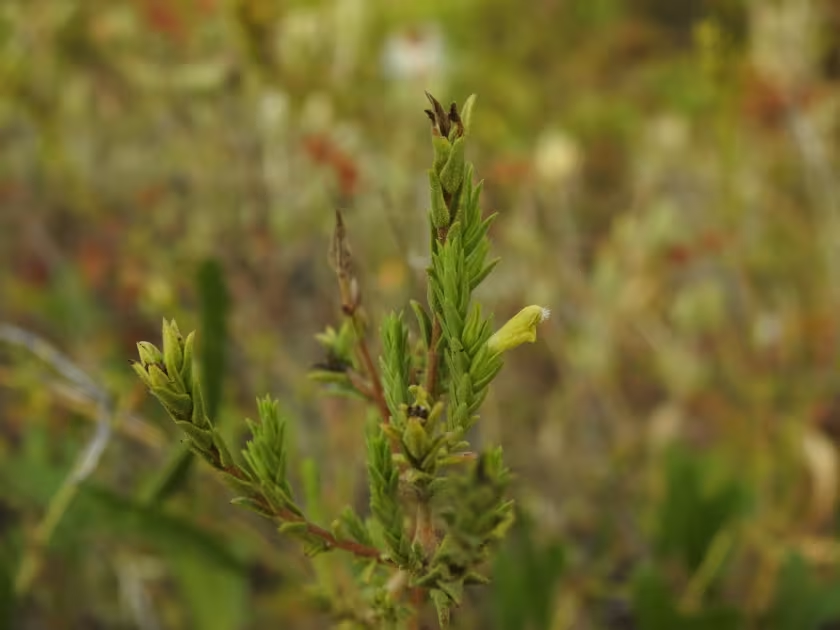
Description
Growing requirements
Nothobartsia asperrima is a distinctive herbaceous plant belonging to the Orobanchaceae family, known for its ability to function as a hemiparasite in various ecosystems.
The native distribution of this species is largely confined to the mountain regions of the Iberian Peninsula, where it thrives in specific subalpine and meadow habitats.
Botanically, it is characterized by a rough, hispid stem and leaf structure, from which the specific epithet asperrima is derived, reflecting its morphological uniqueness.
The species requires well-drained soils, typically found on calcareous or rocky substrates, and favors open areas with significant solar radiation exposure.
As a hemiparasite, its cultivation and growth are inextricably linked to the presence of compatible host plants, which provide essential water and mineral nutrients via haustorial connections.
Main diseases and pests
Habitat loss due to land-use changes poses the primary threat to the stability of Nothobartsia asperrima populations across its limited native range.
The species is susceptible to various soil-borne pathogens that affect the root-haustoria complex, especially during periods of excessive rainfall or poor soil aeration.
Herbivores and specialized insects may impact the flowering stems, potentially reducing seed bank replenishment if the population density is low.
Invasive non-native vegetation can outcompete the species, as Nothobartsia asperrima often requires a stable, established plant community to act as a host.
Climate change, specifically shifting precipitation patterns in the Pyrenees, could lead to a decoupling of the plant's life cycle from that of its host species.