
Orobanche boninsimae
Orobanche boninsimae
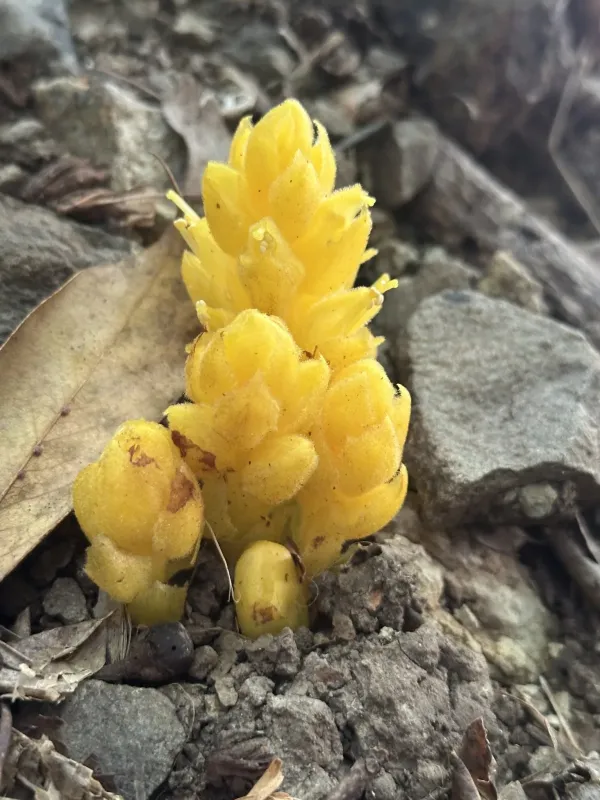
Description
Growing requirements
Orobanche boninsimae is a specialized parasitic plant species belonging to the Orobanchaceae family. Like other members of its genus, it is a holoparasite, meaning it lacks chlorophyll and cannot perform photosynthesis, depending entirely on host plants for survival.
The species is strictly endemic to the Bonin Islands (Ogasawara Islands) in Japan. Its natural habitat is restricted to the subtropical vegetation of these islands, where it has evolved to parasitize specific host species within the local ecosystem.
The plant grows underground for most of its life cycle, producing subterranean stems and root-like haustoria. These haustoria are essential for penetrating the host's root system to extract water, nutrients, and carbon compounds necessary for growth.
Above-ground appearance occurs mainly during the flowering phase. The inflorescence is typically a fleshy spike that emerges from the soil, displaying characteristic flowers that are adapted to attract local pollinators within its narrow geographical range.
Given its highly specialized nature and extremely limited distribution, Orobanche boninsimae is not an agricultural crop. Its value is strictly scientific, serving as a subject for evolutionary studies regarding plant parasitism and island biogeography conservation.