
Beechdrops
Epifagus virginiana
Description
Growing requirements
Beechdrops (Epifagus virginiana) is a unique, non-photosynthetic parasitic plant belonging to the Orobanchaceae family. Because it lacks chlorophyll, it relies entirely on its host for survival, extracting nutrients through specialized structures called haustoria.
The plant is native to the woodlands of North America, where it forms an obligate parasitic relationship with the American beech tree. Its distribution is strictly limited by the presence of its host, making it an indicator species for mature beech forests.
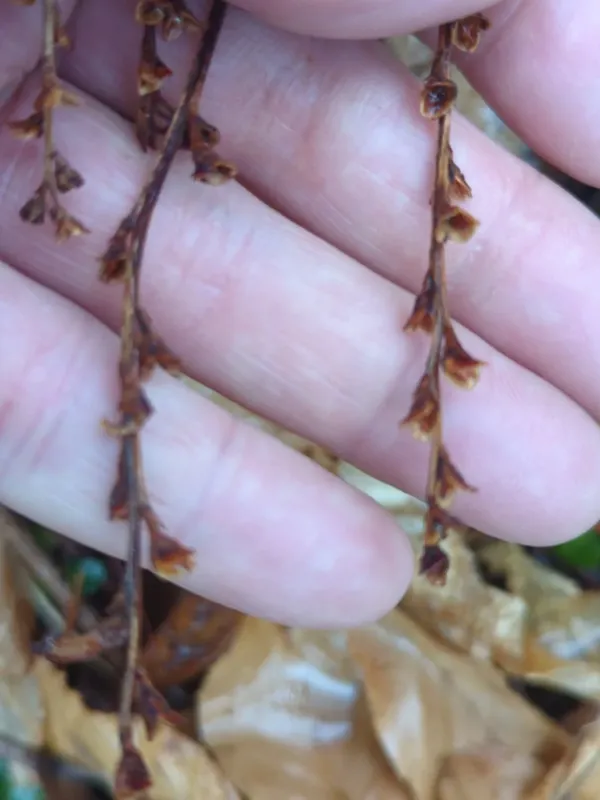
Botanically, it consists of stiff, branched stems that grow directly from the roots of the beech tree. It does not produce green leaves, instead displaying small scales along the stem, and bears two types of flowers: chasmogamous and cleistogamous.
The plant thrives in moist, shaded environments typically found in deciduous forests. It requires the high organic matter content of forest floor soils and cannot be cultivated in standard agricultural settings or gardens.
From an agricultural and botanical perspective, Beechdrops is not a crop but is studied for its evolutionary adaptation to parasitism. There are no known pests or diseases that inhibit its growth, as it exists in a complex ecological balance with its host tree.