
Australian broomrape
Orobanche australiana
Description
Main diseases and pests
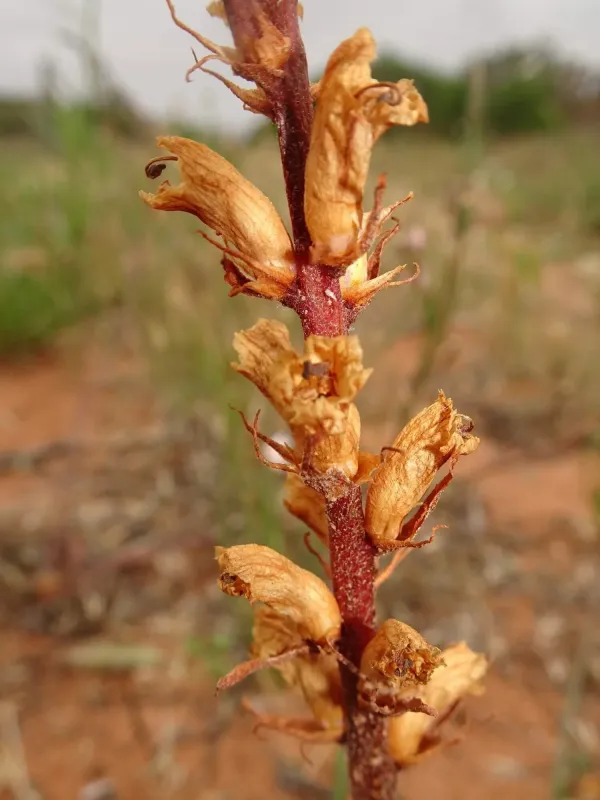
Australian broomrape (Orobanche australiana) is a parasitic plant species belonging to the Orobanchaceae family. It is strictly a non-crop species, recognized as an invasive and harmful parasite that drains resources from its host plants rather than contributing to agricultural output.
The plant lacks chlorophyll and does not perform photosynthesis, relying entirely on the host's root system for survival. Its life cycle involves the germination of microscopic seeds in response to root exudates, followed by the development of haustoria that tap into the host's vascular tissues.
Indigenous to parts of Australia, this species thrives in varied environmental conditions. Its ability to remain dormant in the soil for over a decade makes it an extremely difficult pest to eradicate once it establishes a foothold in a particular agricultural area.
Infection by this parasite results in severe stunting of crops, reduced photosynthesis, and significant yield losses. In cases of heavy infestation, the parasitic pressure can lead to the total collapse of the crop stands by depriving them of essential water and nutrient intake.
Integrated management includes strict quarantine protocols to prevent entry, the utilization of catch crops that trigger suicide germination, and the implementation of long-term crop rotation cycles. Chemical control remains challenging due to the intimate connection between the parasite and the host.