
Alyogyne
Alyogyne hybrids
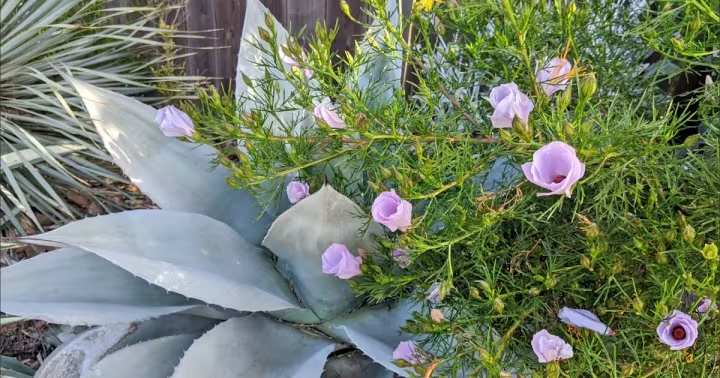
Description
Growing requirements
Alyogyne is a genus of flowering shrubs belonging to the Malvaceae family. The most popular species, often found in various hybrids, is the Blue Hibiscus (Alyogyne huegelii), which is highly valued for its large, delicate flowers that resemble those of the related Hibiscus genus.
The plant is native to Australia, where it thrives in semi-arid environments and open woodlands. Its evolutionary background makes it well-adapted to drought conditions and high levels of solar radiation, which dictates its preference for warm, sunny cultivation sites.
Successful cultivation of Alyogyne requires well-draining, sandy or loamy soils with a pH ranging from neutral to slightly acidic. Because the root system is highly susceptible to rot, it is essential to provide an excellent drainage system, especially when growing the plant in containers or poorly drained garden beds.
As a heat-loving plant, Alyogyne does not tolerate frost or freezing temperatures. In temperate climates, it is typically treated as a greenhouse plant or an annual. The ideal temperature range for vigorous growth is between +20°C and +30°C, with high light intensity required to promote flower production.
Care involves regular, controlled fertilization during the active growing season, ideally using low-phosphorus fertilizers to avoid nutrient toxicity. Pruning is a critical agronomic practice, performed immediately after the flowering cycle to maintain a compact, bushy shape and prevent leggy, woody stems.
Main diseases and pests
The primary threats to Alyogyne health are fungal root rots, which are almost exclusively caused by overwatering or poor soil aeration. Implementing a strict irrigation schedule that allows the soil surface to dry out between watering sessions is the most effective preventative measure.
Pests that commonly infest the foliage include spider mites and mealybugs, particularly in indoor environments or dry greenhouse conditions. Regular monitoring of the underside of the leaves is necessary to catch infestations before they escalate and impact the plant's aesthetic value.
Chemical control involving systemic insecticides or acaricides is recommended for severe infestations. However, in controlled environments, integrated pest management practices such as introducing natural predators are preferred to maintain the plant's health and biological balance.
Insufficient light intensity is a major physiological stressor that increases susceptibility to powdery mildew and other fungal pathogens. Adequate sunlight exposure is not just for blooming; it is a fundamental requirement for maintaining strong cell walls and overall disease resistance.
While modern hybrids exhibit improved vigor and disease tolerance compared to wild species, crop managers should monitor the base of the stem and root collar. Early detection of crown rot, often caused by soil-borne pathogens like Phytophthora, is vital to prevent total crop loss.