
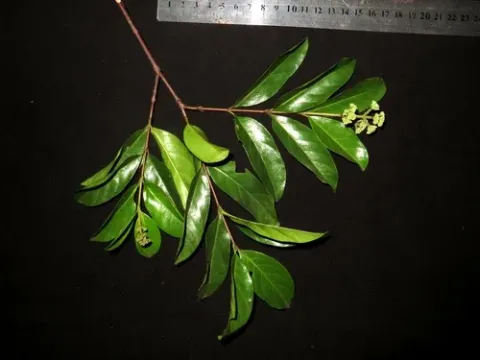
Norrisia
Norrisia
Norrisia, represented notably by the species Norrisia major, requires specific conditions for successful seed germination in professional cultivation.
What the section contains

Norrisia
The seeds should be sown in a well-draining, nutrient-rich substrate that mimics the organic-rich environment of tropical forests.
Maintaining a consistent temperature between 22 and 25 degrees Celsius is essential to encourage the embryos to sprout reliably.
The planting medium must be kept moist but not saturated, as excess water can cause the seeds to rot before they can establish a root system.
Professional nursery practices often involve specialized stratification techniques to ensure high germination rates across batches of seeds.
Belonging to the Loganiaceae family, Norrisia is a plant adapted to high-humidity, tropical ecosystems where growth is continuous throughout the year.
The species requires a stable environment with no exposure to frost, as any drop in temperature below the threshold can lead to severe physiological stress.
Soil quality is paramount; the plant performs best in porous, aerated soils that allow for rapid drainage while retaining necessary moisture.
Light management is crucial, as the plant prefers bright, indirect light conditions rather than harsh, direct tropical sun that could scorch its foliage.
Frequent fertilization with balanced micronutrients is recommended to support the complex metabolic processes of this specific botanical genus.
Fungal diseases are the most significant threat to Norrisia, particularly when the plant is kept in environments with poor air circulation.
Leaf spot pathogens can rapidly diminish the decorative and physiological value of the plant if humidity levels remain too high for extended periods.
Pest pressures include various sap-sucking insects like aphids and scale insects that target the tender stems and emerging leaf buds.
Root system health must be monitored closely to avoid issues like Phytophthora or other soil-borne diseases that thrive in damp, heavy soils.
Integrated pest management, including regular inspection and the use of targeted biological controls, is essential for maintaining plant health.