
Mentzelia involucrata
Mentzelia involucrata
Description
Growing requirements
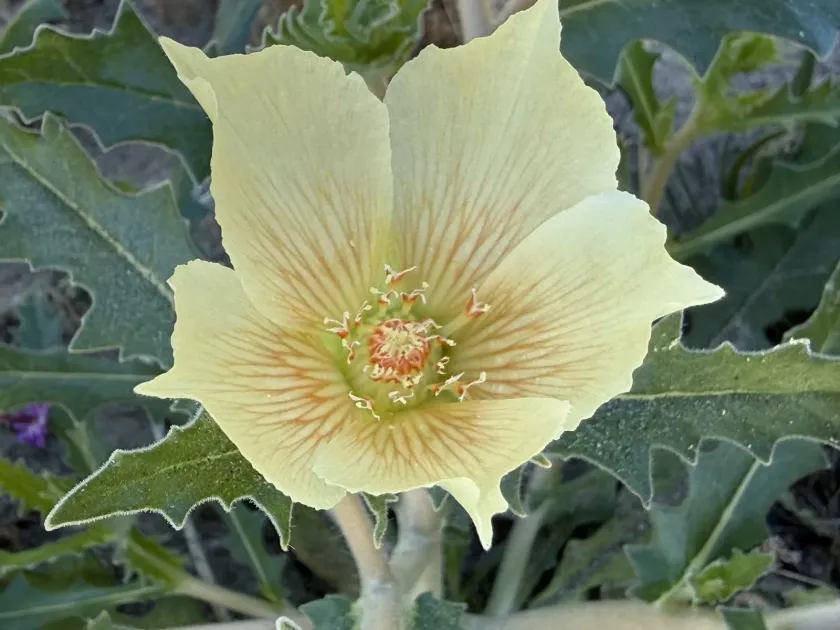
Mentzelia involucrata, commonly known as the desert blazing star or silver leaf blazing star, is an annual herbaceous plant belonging to the Loasaceae family. It is native to the arid desert landscapes of the southwestern United States and Mexico, where it thrives in high-temperature environments.
The plant features distinct foliage covered in fine, stiff hairs that provide protection against intense sunlight and dehydration. Its growth habit is typically compact and branching, making it an excellent candidate for xeriscaping and desert-climate gardens.
Cultivation requires full sun exposure throughout the growing season to ensure optimal bloom development. Inadequate light levels can lead to stunted growth and failure to produce the species' characteristic, vibrant, papery flowers.
Soil requirements are strict, focusing primarily on excellent drainage. Sandy, rocky, or gravelly soils are ideal for mimicking the plant's natural habitat. Heavy or compacted soils must be amended to prevent moisture retention, which is fatal for this species.
While primarily cultivated for ornamental purposes, Mentzelia involucrata is studied for its remarkable drought resistance mechanisms. It serves as a valuable model for water-efficient horticulture in regions facing prolonged dry spells.
Main diseases and pests
Root rot is the most significant disease threat to Mentzelia involucrata, primarily triggered by excessive irrigation or poor drainage. Once roots are compromised, the plant often wilts rapidly, making early detection and preventative soil management critical.
Pests such as aphids and spider mites frequently affect the plant during peak summer heat. These insects settle on the undersides of leaves and stems, causing discoloration, stunting, and reduced aesthetic value if left untreated.
To mitigate these threats, maintain strict irrigation schedules, ensuring the top layer of soil dries out completely between waterings. Air circulation is vital to prevent fungal pathogens from settling on the foliage.
Insect management requires targeted application of horticultural oils or insecticides appropriate for desert-adapted plants. It is important to apply these treatments during cooler periods of the day to prevent plant damage.
Maintaining a clean growing area and removing infected plant debris helps significantly reduce the risk of recurring pest infestations. Integrated pest management strategies are highly recommended for larger scale ornamental plantings.