
Mentzelia albicaulis
Mentzelia albicaulis
Description
Sowing dates
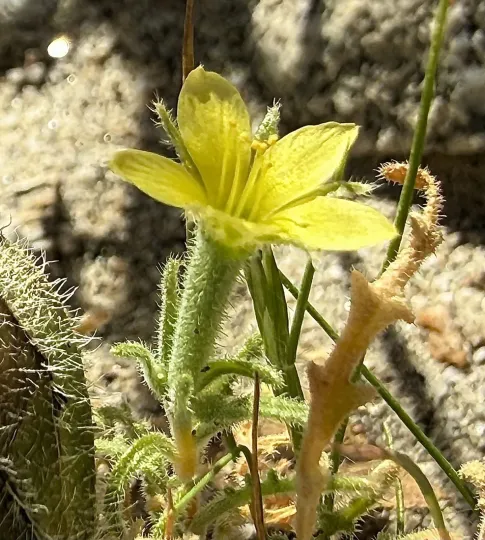
Mentzelia albicaulis, commonly known as the white-stemmed mentzelia, is an annual herb belonging to the Loasaceae family. It is native to the arid regions of North America, where it has evolved to thrive in harsh, desert-like conditions.
The optimal time for sowing is during early spring once the risk of frost has passed. Because the plant develops a deep taproot, it is highly sensitive to transplantation; therefore, direct sowing into the final location is strongly recommended.
Seeds should be sown shallowly, at a depth of approximately 0.5 to 1 cm. Keeping the substrate lightly moist is essential until germination occurs, after which the watering frequency should be reduced significantly to match the plant's natural habitat.
Choosing a site with full sun exposure is critical for the success of this crop. Mentzelia albicaulis does not perform well in shaded areas, as poor lighting leads to etiolated, weak stems and reduced flower production.
Thinning should be performed shortly after the seedlings emerge to ensure adequate spacing. Proper spacing prevents resource competition and allows for better air circulation, which is vital for the plant's long-term health.
Growing requirements
This species requires well-draining soils, preferably sandy or gravelly textures. It is intolerant of heavy, clay-rich soils that retain moisture, as these conditions rapidly lead to root rot and other fungal pathogens.
Mentzelia albicaulis is highly drought-tolerant and thrives in hot climates with minimal precipitation. It is an excellent candidate for xeriscaping and desert gardening where water conservation is a priority.
Soil pH should be neutral to slightly alkaline. The plant does not require heavy fertilization; in fact, excessive nitrogen often promotes excessive vegetative growth at the expense of floral development and general resilience.
The climate requirements include high daytime temperatures and low atmospheric humidity. The plant is adapted to withstand intense UV radiation, which helps maintain its compact and sturdy habit.
Maintenance involves minimal intervention. Cultivation of the soil surface should be light to avoid damaging the taproot. Providing occasional supplemental water during extreme droughts may be beneficial, but it must be done sparingly.
Yield
The primary use of Mentzelia albicaulis is in decorative landscaping, particularly in native plant gardens and dry ecological restoration projects. It adds aesthetic value to arid regions with its delicate foliage and bright flowers.
While not a commercial field crop, its yield in terms of seed production is reliable under proper conditions. Seeds should be collected once the capsules turn brown and begin to open, ensuring maximum viability.
Proper storage of seeds in a cool, dry, and dark environment ensures high germination rates for the following season. Maintaining seed purity is important if one intends to propagate the plant year after year.
The plant attracts various pollinators, including bees and butterflies, which are essential for its seed set. Its presence in a garden or field can enhance the local biodiversity of arid environments significantly.
Future research into its potential as a specialized forage or soil stabilizer in degraded arid lands could uncover new economic opportunities for this resilient species.
Main diseases and pests
The most significant threat to Mentzelia albicaulis is overwatering. Excessive soil moisture is almost invariably fatal for this plant, making drainage the most critical factor in successful cultivation.
Insect pests such as aphids may congregate on young, succulent tissues during the early growth phase. Regular inspection of the undersides of leaves can help in managing populations before they cause major damage.
- Root rot (caused by poor drainage).
- Powdery mildew (due to high humidity or stagnant air).
- Aphid infestations on new shoots.
- Competition from invasive weeds.
- Herbivory from local fauna in naturalized settings.
Preventive measures include ensuring proper plant spacing to facilitate airflow and preventing waterlogged soil conditions. Mechanical weed control should be prioritized over chemical treatments to maintain the plant's health.
In case of pest outbreaks, targeted and light applications of non-persistent soaps or oils are generally sufficient. Prevention through sound cultural practices remains the best defense against both diseases and pests.