
Mentzelia lindleyi
Mentzelia lindleyi Torr. & A. Gray
Description
Sowing dates
Mentzelia lindleyi is a heat-loving annual crop that should be sown directly into the open ground only after the risk of frost has completely passed and the soil has warmed up.
The optimal sowing time in most temperate regions is late May, when ground temperatures consistently reach at least 15–18 degrees Celsius.
If starting seeds indoors, use peat pots to allow for transplanting without disturbing the delicate taproot system, which does not tolerate rough handling.
Seeds are extremely small and should be sown on the surface of well-drained, light soil, lightly dusting them with fine vermiculite to maintain moisture without burying them.
Germination typically occurs within 10 to 14 days under bright, warm conditions, requiring a consistent light level to ensure sturdy, non-leggy seedlings.
Growing requirements
Belonging to the Loasaceae family, this species is native to arid regions of California, which dictates its preference for intense sun and low humidity.
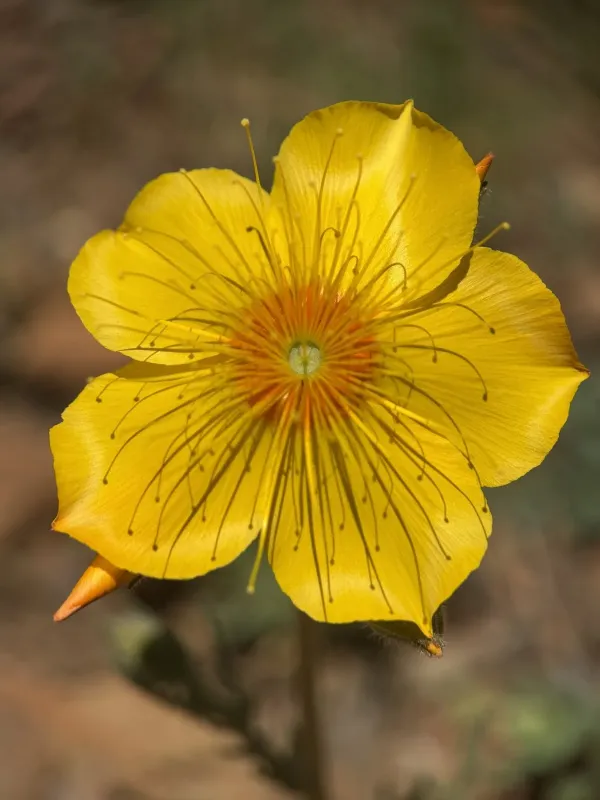
This plant thrives in full sun exposure, requiring at least 6–8 hours of direct light daily to produce its characteristic golden-yellow flowers.
Soil requirements are strict regarding drainage; sandy or rocky substrates are ideal to prevent moisture stagnation, which is the primary cause of crop failure.
As a drought-tolerant crop, Mentzelia lindleyi requires minimal supplemental irrigation, thriving even in thin, nutrient-poor soils where other plants might struggle.
Gardeners should avoid heavy mulching around the base of the stems, as this traps humidity and can promote collar rot, especially in cooler, cloudy climates.
Main diseases and pests
Slugs and snails are the most significant threats to young Mentzelia seedlings, often devouring them shortly after germination during wet weather conditions.
Powdery mildew is a common fungal threat when plants are crowded or when airflow is insufficient, leading to a visible white fungal layer on the leaves.
Root rot is highly prevalent in poorly drained soils and is almost always fatal, as the plant’s anatomy is not evolved to handle saturated growing conditions.
Aphids may infest the flower buds during periods of heat stress, hindering normal development and reducing the ornamental value of the display.
Effective management includes keeping the growing area free of debris and weeds to reduce habitat for pests and ensuring proper spacing for maximum air circulation.