
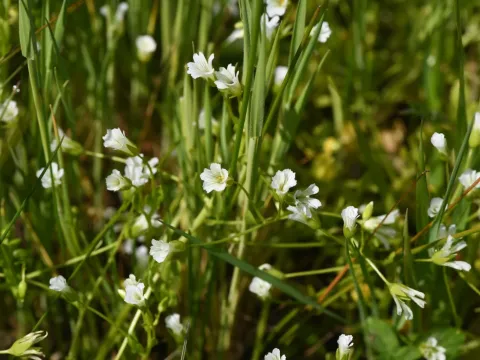
Limnanthes bakeri
Limnanthes bakeri
Limnanthes bakeri is an annual herb whose lifecycle is strictly adapted to seasonal rainfall patterns. In its natural habitat, germination is triggered by autumn moisture, allowing the plant to establish itself before the peak of the growing season.
What the section contains
Limnanthes bakeri
When cultivated, seeds are typically sown in late autumn or early spring into well-prepared beds. The seeds require light for germination, meaning they should be only lightly covered with soil to ensure optimal light exposure.
Row spacing is essential for air circulation, which prevents the development of fungal diseases. Planting density should be carefully managed, as overcrowding quickly leads to poor development and increased susceptibility to pathogens.
The ideal temperature for successful germination ranges from 10 to 15 degrees Celsius. Exceeding these temperatures can cause dormancy or severely inhibit the initial emergence of seedlings in early spring conditions.
Post-emergence management involves ensuring that the root zone remains consistently moist without becoming waterlogged. The rapid development of the root system during the initial phase requires loose, friable soil structure to avoid resistance.
This species belongs to the Limnanthaceae family and thrives in conditions that mimic its native northern Californian environment. It demands full sun exposure, as any significant shading will drastically reduce the plant's vigor and flowering potential.
The soil should be nutrient-rich and moisture-retentive while maintaining excellent drainage. Although it tolerates heavy clay soils, it requires a steady moisture supply throughout the growing period to thrive.
Temperature management is critical, as Limnanthes bakeri is a cool-season plant. Excessive heat causes premature wilting and shifts the plant's energy towards seed production rather than vegetative growth, shortening its productive life.
Fertilization should be handled with caution, as high levels of nitrogen can lead to excessive green growth at the expense of floral development. A balanced, organic-based approach is best suited to maintain healthy growth rates.
Wind protection is beneficial in open field conditions, as consistent breezes accelerate water loss from both the foliage and the soil. Sheltered planting sites generally produce more uniform stands and higher quality blooms.
Fungal pathogens, particularly those causing damping-off and root rot, represent the most significant threat to Limnanthes bakeri. These are usually exacerbated by stagnant water and high humidity during the early growth stages.
Pests like aphids are frequently attracted to the tender tips and developing flower buds. Integrated pest management strategies, focusing on biological controls, are recommended to protect the crop without harming pollinators.
Gastropods, such as slugs and snails, can cause extensive damage to young seedlings during damp spring weather. Implementing physical barriers or traps is a standard practice to reduce herbivory in early development.
Poor soil structure leading to oxygen deficiency in the root zone is a physiological threat that manifests as stunted growth. Aeration of the soil surface between rows can mitigate this issue in denser planting environments.
Strict hygiene in the cropping area is essential to prevent the buildup of soil-borne diseases. Avoiding monoculture by rotating crops with non-related species is highly effective for maintaining soil health over multiple seasons.