
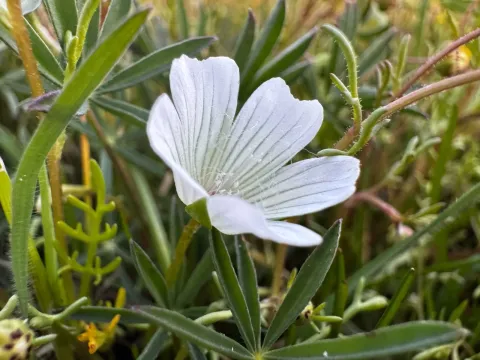
Limnanthes
Limnanthes
Limnanthes, widely known as meadowfoam, is primarily cultivated as a winter annual crop. The optimal sowing period is during the autumn when moderate temperatures facilitate uniform seed germination.
What the section contains

Limnanthes
In regions with harsh winters, early spring sowing is practiced once the soil conditions permit field operations. Meadowfoam seeds exhibit high germination vigor when provided with sufficient soil moisture.
The sowing process involves using grain drills to place seeds at a shallow depth of no more than 1–2 centimeters. Ensuring uniform spacing is crucial for developing a dense, productive canopy.
Seeding rates are typically calculated to achieve a plant density of approximately 200–300 plants per square meter. Over-seeding may lead to increased risk of lodging during adverse weather conditions.
For a successful establishment, the seedbed must be well-prepared and fine-textured to ensure optimal contact between the seeds and the soil, which is essential for rapid root development.
Limnanthes belongs to the Limnanthaceae family and naturally inhabits moist, wet environments of the North American Pacific coast. The crop is highly sensitive to moisture availability during the early vegetative stages.
The plant thrives in cool, temperate climates. It demonstrates remarkable frost tolerance in its vegetative phase, allowing it to survive under snow cover without suffering significant damage.
Regarding soil, meadowfoam is relatively adaptable but achieves the best yields in heavy, moisture-retentive silt or clay soils. Prolonged drought, especially during the flowering stage, can significantly decrease seed oil content.
Excessive nitrogen fertilization is discouraged, as it promotes vegetative overgrowth at the expense of reproductive development. The ideal soil pH ranges from slightly acidic to neutral.
Full sun exposure is a critical requirement for meadowfoam. The crop does not tolerate shading from weeds or neighboring high-density plants, which can severely hinder its overall growth and productivity.
The primary economic value of Limnanthes lies in the production of high-quality vegetable oil containing unique long-chain fatty acids. This makes it a prized commodity for the cosmetic and chemical industries.
Average seed yields typically range from 1.5 to 2.5 metric tons per hectare. Final productivity is largely determined by rainfall distribution during the growing season and successful pollination.
The oil content in seeds is significant, reaching 25–30% of the dry weight. Meadowfoam oil is highly valued for its exceptional oxidative stability, making it superior to many conventional vegetable oils.
The crop also serves as an excellent early-season honey source. Field cultivation contributes to beekeeping activities, allowing for the harvest of high-quality honey from its nectar-rich flowers.
Yield stability is often challenged by the natural tendency of seeds to shatter when fully mature. Determining the exact time for harvest is vital to maximize total output.
In industrial field production, Limnanthes can be affected by specific fungal diseases. Gray mold is the most common threat, often developing under conditions of excessive humidity and poor air circulation.
Root rot diseases may occur in poorly drained fields where standing water creates an environment for pathogen proliferation. Crop rotation and soil management are key preventive measures.
Slugs and snails can pose a significant threat to young seedlings, especially in damp, cool spring conditions. They are capable of decimating early-stage crops if not properly managed.
Aphids may infest the plants during the flowering phase, extracting nutrients and affecting reproductive organs. Insecticide use must be carefully planned to avoid harm to beneficial pollinators.
Effective weed management is essential from the beginning. Selective herbicide use is required, as the crop is sensitive to many standard chemical treatments applied in larger field operations.
Harvesting Limnanthes is a technically demanding task due to the high risk of seed shattering. The optimal harvest time occurs when the majority of seeds turn a characteristic brown color.
Swathing is the most effective method, where plants are cut and left in rows to dry down naturally. This minimizes seed loss and reduces the moisture content before final combining.
Combining requires precise adjustment of cylinder speeds and concave settings to avoid damaging the delicate seeds, which are rich in valuable lipids. Careful handling is necessary during all processing steps.
Post-harvest, the seeds must be thoroughly cleaned of debris and dried to a moisture content of 8–10%. High humidity during storage leads to rapid deterioration of seed quality.
Stored material should be kept in cool, dry, and well-ventilated silos. Regular monitoring for moisture and temperature is required to prevent mold growth and heating within the bulk storage.