
Patchouli
Pogostemon cablin (Blanco) Benth.
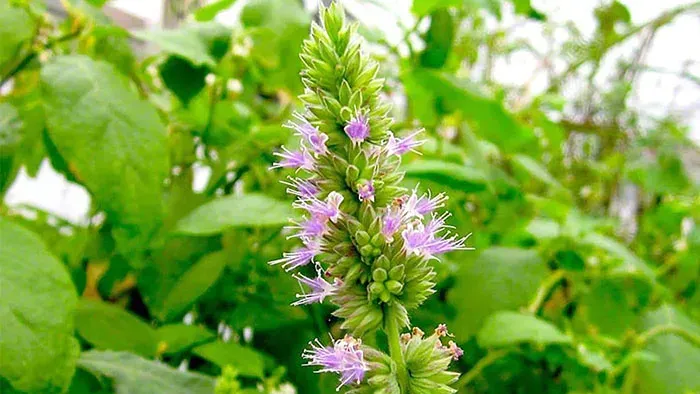
Description
Sowing dates
In commercial agriculture, patchouli (Pogostemon cablin) is propagated primarily through vegetative means rather than seeds, as cultivated varieties often fail to produce viable offspring. Cuttings are taken from healthy, vigorously growing shoots of parent plants.
Cuttings, typically 10–15 centimeters long, are planted in nurseries or directly into prepared beds, provided there is high air humidity. The ideal time for establishing plantations is the beginning of the rainy season, which ensures the plants have sufficient moisture to root successfully.
Before planting, the soil is thoroughly tilled and enriched with organic matter, creating a loose structure that facilitates rapid root system development. Plants are typically spaced 50–60 centimeters apart to ensure adequate airflow and prevent overcrowding.
The rooting period lasts about 2–3 weeks, during which regular watering and protection from harsh direct sunlight are essential. Once adapted, the plants begin to grow vegetative mass, which serves as the primary crop.
It is recommended to renew plantations every 2–3 years, as the productivity of the shrub declines with age, leading to a decrease in the concentration of valuable essential oils in the leaves.
Growing requirements
Patchouli is a tropical perennial shrub belonging to the Lamiaceae family. The crop is highly sensitive to temperature, with an optimal growth range of 24 to 30 degrees Celsius.
Successful cultivation requires high atmospheric humidity, preferably between 75–80%. Patchouli does not tolerate direct, harsh sun in dry regions, nor does it thrive in waterlogged soil, necessitating shading and good drainage.
Soils should be fertile, light, and sandy or loamy, rich in organic content. The ideal pH range is between 5.5 and 6.5, which is necessary for optimal nutrient uptake.
Agronomic practices include regular applications of nitrogen-based fertilizers to stimulate the growth of green foliage. While the plant has a developed root system, it remains shallow, necessitating the use of mulch to maintain soil moisture and prevent overheating.
In its natural habitat, the crop cannot withstand temperatures below 15 degrees Celsius, which limits its industrial production zone primarily to tropical regions in Southeast Asia, India, and Indonesia.
Yield
The yield of patchouli depends on planting density and the frequency of harvests. From one hectare, a farmer can obtain between 5 and 10 metric tons of fresh leaves annually, which are then processed for oil distillation.
The essential oil content in dried leaves typically ranges from 2 to 3.5 percent, depending on the cultivar and environmental conditions. Drying technology is critical; rapid shade-drying is necessary to preserve volatile compounds and ensure high oil quality.
With intensive management, harvests can occur 2–3 times per year. It is crucial to balance the frequency of harvesting with the recovery time of the plant to avoid premature depletion of the shrub's life cycle.
After harvesting, the shoots undergo a fermentation process for several days, which helps release the oil from the leaf tissue. This phase requires strict quality control to prevent mold growth and ensure the final product meets industry standards.
The final yield of essential oil is approximately 50–100 kilograms per hectare per year, making patchouli one of the most economically valuable essential oil crops globally.
Main diseases and pests
Fungal diseases, such as root rot and Fusarium wilt, pose a significant threat to patchouli, especially when plants are grown in poorly drained soils or over-watered environments.
Leaf-feeding pests, including various caterpillars and aphids, can quickly decimate significant portions of the foliage, leading to reduced yields. Regular monitoring is vital to manage these outbreaks before they spread throughout the plantation.
Bacterial wilt, caused by pathogens like Ralstonia, can destroy entire sections of a crop. The most effective mitigation strategies include using disease-resistant clones and strictly adhering to crop rotation practices.
Nematodes that attack the root system are also a major concern, particularly on older plantations. Preventive measures such as soil disinfection and avoiding planting in areas previously used for susceptible vegetable crops are recommended.
Weeds compete aggressively with patchouli for nutrients and light, requiring constant weeding, especially in the early stages of the crop's development before the foliage canopy closes.
Harvesting
Harvesting begins when the shrubs reach the stage of maximum oil accumulation, identified by the characteristic strong aroma and the maturity of the leaves. The optimal harvest height is approximately 15–20 centimeters above the ground.
The harvested plant material is spread in thin layers on racks or designated platforms for drying. Exposure to direct sunlight is strictly avoided as it degrades heat-sensitive essential oil components and discolors the raw material.
After initial wilting, the leaves are separated from the woody stems, as the majority of the oil is concentrated in the leaf blades. The leaves are dried to a specific moisture level (around 15%) before moving to the distillation stage.
Steam distillation is the most common method used to extract the oil. The process is time-consuming because patchouli oil is highly viscous and difficult to vaporize from the plant material.
Following distillation, the oil is aged in storage containers. This "maturation" process allows the aroma to deepen, developing the complex, earthy, and woody notes that are highly prized in the fragrance industry.