
Gmelina
Gmelina arborea Roxb.
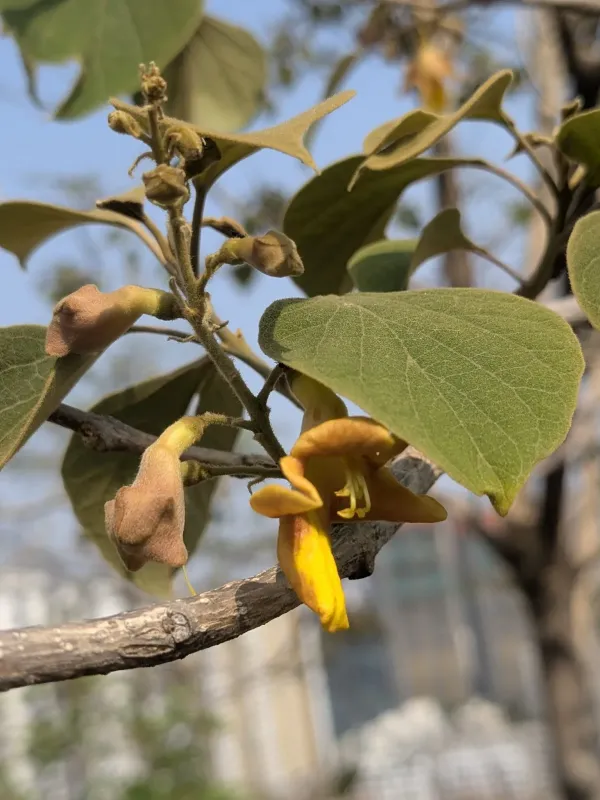
Description
Sowing dates
Gmelina arborea seeds are typically sown in specialized nurseries to ensure high germination rates, as the species requires controlled conditions during the initial stage. Sowing is best timed at the beginning of the rainy season to guarantee moisture for root establishment.
Seeds often undergo pre-sowing treatments, such as water soaking or cyclic temperature exposure, to soften the hard outer coat and promote uniform germination. Planting is carried out in containers or raised beds with a nutrient-rich, porous medium.
Seedlings are transplanted to their permanent location once they reach a height of 30–50 cm, usually 3 to 4 months after sprouting. It is essential to handle the root ball carefully to prevent damage to the primary taproot.
When establishing commercial plantations, planting patterns are designed to optimize crown development, typically spacing trees between 2x2 and 3x3 meters to encourage rapid canopy closure and suppress competing weeds.
Maintenance during the first two years involves regular weeding and mulching around the base, which is crucial for protecting the young, vulnerable saplings from aggressive tropical grass species.
Growing requirements
Gmelina arborea is a fast-growing forest species belonging to the Lamiaceae family, native to the tropical forests of Southeast Asia. It thrives in humid tropical environments with annual rainfall ranging from 750 to 4500 mm.
The crop has specific requirements for soil fertility and aeration. It performs best in deep, well-drained alluvial soils with a neutral or slightly acidic pH level, as it cannot tolerate waterlogged conditions.
The temperature range for successful cultivation should remain consistently warm, between 20 and 35 degrees Celsius. Gmelina is sensitive to frost and sudden temperature fluctuations, making it unsuitable for temperate climates.
Sunlight is a key factor for this species; it is highly light-demanding and requires full sun exposure to develop a straight bole and achieve rapid biomass accumulation. Growth intensity significantly drops under shade.
In its natural habitat, Gmelina is found in both evergreen and deciduous forests, demonstrating its adaptability to seasonal moisture variations as long as minimum rainfall requirements are met during the growing season.
Yield
Gmelina is highly prized for its exceptional growth rate, making it a lucrative choice for commercial forestry. Under optimal conditions, the trees reach harvestable timber size in just 10–15 years.
The average annual timber volume increment can reach 15–25 cubic meters per hectare when proper agrotechnical practices are implemented, significantly outperforming many other deciduous species.
Industrial applications include the production of high-quality lumber, furniture, musical instruments, and veneer. The wood is lightweight, strong, resistant to warping, and easy to machine with both manual and power tools.
Beyond timber, the plant has medicinal applications. The bark, roots, and leaves are utilized in traditional systems like Ayurveda due to the presence of bioactive compounds with anti-inflammatory properties.
Gmelina also serves as an excellent honey plant, attracting bees during its flowering period, which provides an opportunity for secondary beekeeping activities to increase the overall economic yield of the plantation.
Main diseases and pests
The primary pests affecting Gmelina include scale insects and various leaf-eating caterpillars, which can severely stunt the growth of young saplings. Infestations often require targeted insecticide application.
Fungal diseases represent a serious threat, particularly leaf spot and root rot, which are most prevalent in areas with poor drainage where rainwater accumulates around the base of the tree.
Plantations are often susceptible to termite damage, which can lower the market value of the timber. Proactive management involves maintaining high sanitary standards and culling infected trees early.
Young stands can suffer from invasive climbing vines that wrap around stems, causing deformation and breakage. Consequently, regular pruning and weed control are mandatory in the management schedule.
It is also important to consider the risk of damage by large herbivores, which may strip bark or graze on young shoots, necessitating the use of fencing to protect the site during the early development phase.