
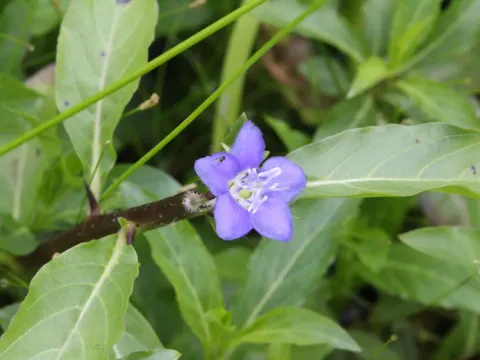
Hydrolea uniflora
Hydrolea uniflora
Hydrolea uniflora, commonly known as one-flowered hydrolea, belongs to the Hydrophyllaceae family. It is a perennial aquatic or semi-aquatic plant native to damp, marshy environments, typically found across various regions of North America.
What the section contains
Hydrolea uniflora
The plant is biologically characterized by its stoloniferous growth, allowing it to colonize wet soils efficiently. Its stems support elongated, lanceolate leaves, and the plant produces distinctive, vibrant blue flowers that bloom throughout the growing season.
For successful cultivation, Hydrolea uniflora requires saturated soil or shallow water conditions. It thrives in nutrient-rich substrates and prefers environments that mimic its natural wetland habitat, including high humidity and stable water levels.
Climate requirements for this species are focused on moderate to warm temperatures, as the plant is not frost-tolerant. It performs best in temperate climates where the growing season is long enough to support consistent floral production.
The primary economic use of this plant is within the landscape industry, specifically for pond restoration and decorative water gardening. Its ability to form dense stands makes it an excellent choice for stabilizing banks and creating naturalistic aquatic borders.
The main threats to Hydrolea uniflora include fungal pathogens such as stem rot, which can occur when water becomes stagnant or overly acidic. Maintaining proper water quality and aeration is essential for preventing the rapid spread of decay.
Pests that commonly impact this species include aphids and various leaf-feeding insects. Growers must monitor the plant population closely during the peak growing season to ensure timely intervention using non-toxic management practices to protect the aquatic environment.