
Curly waterweed
Lagarosiphon major (Ridl.) Moss
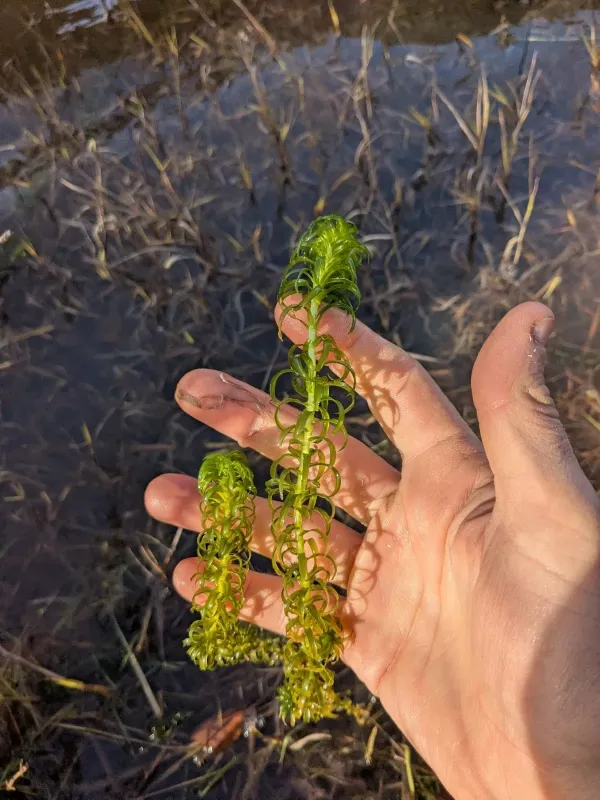
Description
Growing requirements
Curly waterweed (Lagarosiphon major) is an aquatic perennial plant belonging to the Hydrocharitaceae family. It is known for its oxygenating properties, although it is widely recognized as a serious invasive species.
Native to Southern Africa, this plant has colonized various water bodies globally. It typically grows in submerged clusters, anchoring itself firmly into the substrate of rivers, lakes, and ponds.
The plant thrives in clear to moderately turbid water with temperatures ranging from 10 to 25 degrees Celsius. It exhibits significant tolerance for low nutrient levels, extracting resources directly through its foliage.
Regarding cultivation, it requires constant submersion. Even minor fluctuations in water levels can affect its growth, but it is incredibly resilient to fragmentation, which assists in its spread.
In managed environments, it is often kept for its aesthetic appeal in aquariums, yet its rapid growth rate demands regular pruning to prevent it from outcompeting other species in the tank.
Main diseases and pests
The primary threat posed by Lagarosiphon major is the formation of dense mats that displace native aquatic vegetation. These mats also alter water flow and oxygen levels significantly.
Disease pressure on this species is minimal. It does not suffer from traditional agricultural pathogens, making it a robust survivor that requires no specific chemical defense measures.
There are no significant pests that limit its population growth in most regions where it is considered invasive. Its chemical makeup makes it unpalatable to most local aquatic fauna.
Mechanical harvesting is the most common approach for large-scale control. This involves the use of specialized underwater cutters followed by the removal of plant material to prevent regrowth.
To prevent its spread, authorities emphasize strict quarantine on the trade and disposal of aquatic plant material. Public awareness regarding the ecological impact of this plant is critical.