
Viminaria juncea
Viminaria juncea
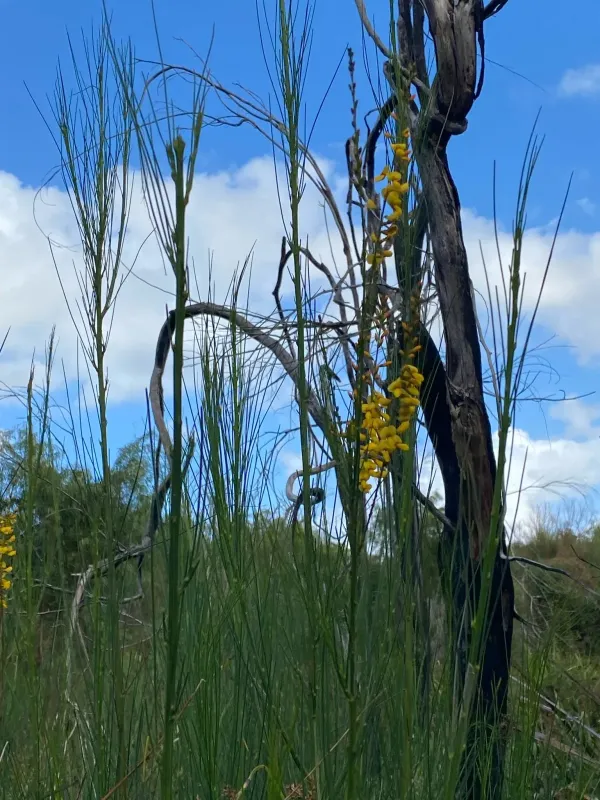
Description
Growing requirements
Viminaria juncea, commonly known as the Golden Spray, is a unique perennial shrub belonging to the Fabaceae family. It is native to Australia, where it naturally inhabits sandy soils and swampy areas, demonstrating remarkable adaptability to varying moisture levels.
The most distinctive botanical feature of this plant is its modified foliage. Adult plants do not have true leaves; instead, they possess long, slender, and flexible photosynthetic branches that give the shrub a rush-like appearance, hence the species name juncea.
For successful cultivation, Viminaria juncea requires a site with full sun exposure. It thrives in climates that mirror its native environment, preferring temperate conditions without severe frost. While it can handle some drought once established, young plants need consistent moisture.
The ideal soil for this species is well-draining, slightly acidic, and sandy. It does not perform well in heavy, waterlogged clays, as stagnant water significantly increases the risk of root rot. Providing excellent drainage is a critical requirement for long-term health.
Propagation is primarily achieved through seeds. To ensure a successful germination rate, seeds should be treated with hot water or scarified, as the outer seed coat is quite hard and needs to be compromised to allow water absorption for the embryo to begin developing.
Main diseases and pests
Viminaria juncea is generally considered a low-maintenance plant with high natural resistance to many common horticultural pests. Its unique biological structure makes it less susceptible to the standard range of insects that target leafy broad-leaved shrubbery.
However, gardeners should watch for signs of fungal pathogens if the plants are situated in areas with poor airflow or consistently high humidity. Maintaining proper spacing between shrubs can help mitigate these risks and prevent moisture from lingering on the stems.
Pests such as mealybugs or aphids may occasionally appear on the tender young growth during spring. These infestations are usually localized and can be managed effectively with a focused application of organic insecticidal soaps or by simply rinsing the affected branches with water.
Another threat arises from soil-borne pathogens if the plant is over-watered or if the soil lacks sufficient oxygenation. Avoiding over-fertilization is also crucial, as an excess of nitrogen can create soft, succulent tissue that is much more attractive to sucking insects and fungal infections.
Lastly, mechanical damage from garden equipment during weeding or maintenance can create entry points for disease. Always use caution when working near the base of the shrub to ensure the root system remains undisturbed and healthy throughout the growing season.