
Templetonia
Templetonia
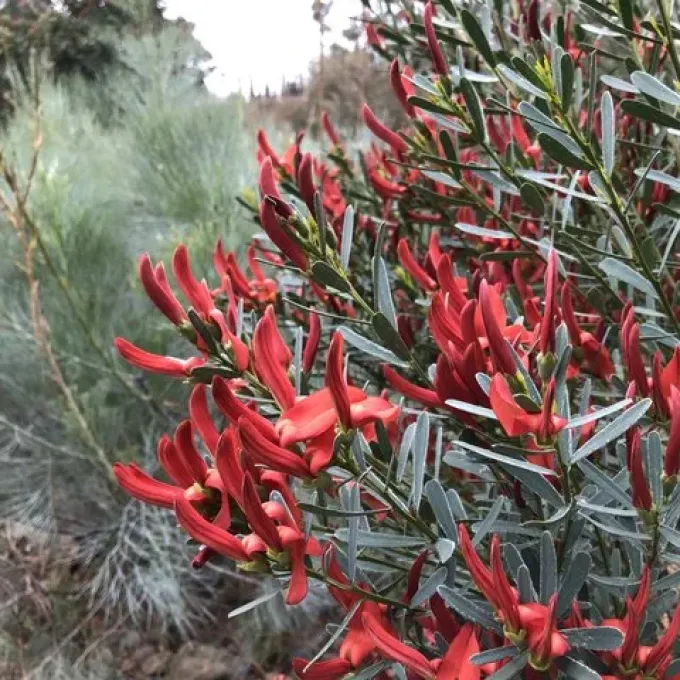
Description
Growing requirements
Templetonia is a genus of shrubs belonging to the Fabaceae family, native primarily to the Australian continent. These plants are recognized for their distinct, usually pea-like flowers and their ability to thrive in diverse Australian environments, ranging from coastal areas to dry shrublands.
The plant thrives in full sun conditions, requiring at least 6 to 8 hours of direct light daily. Exposure to sufficient sunlight is essential for maintaining a compact growth habit and ensuring prolific flowering cycles throughout the active growing season.
Regarding soil requirements, Templetonia performs best in well-drained, sandy or light loam soils. Proper drainage is the most critical aspect of its care, as the root system is highly susceptible to rot if subjected to waterlogged conditions or poor aeration.
Climate adaptation is a key strength of this genus, as many species are evolved to withstand periods of low rainfall. Once established, the shrubs are drought-tolerant, though supplemental irrigation may be necessary during prolonged heatwaves to preserve overall plant vitality.
In terms of agricultural and horticultural significance, Templetonia is valued for its nitrogen-fixing capabilities, characteristic of the legume family. This makes it a beneficial plant for soil improvement and sustainable gardening, particularly in regions with poor nutrient profiles.
Main diseases and pests
The most significant threats to Templetonia include fungal pathogens such as Phytophthora, which thrive in moist and poorly drained soils. These pathogens can rapidly destroy the root system, often leading to the sudden decline and death of the shrub.
Pests like aphids and spider mites can infest the foliage, particularly during dry spells or in greenhouse conditions. These pests suck the plant's sap, potentially causing stunted growth and predisposing the plant to secondary viral or bacterial infections.
Integrated pest management is recommended to keep these shrubs healthy. This involves monitoring the underside of the leaves and implementing organic pest control measures early in the season to prevent large-scale infestations.
Cold stress can also affect the health of Templetonia, especially for species not adapted to heavy frosts. Protecting the base of the plant with organic mulch can help regulate soil temperature and prevent freeze-thaw cycles from damaging the sensitive root structure.
Maintaining good airflow around the plant is essential for disease prevention. By spacing plants appropriately and removing dead or diseased wood through periodic pruning, gardeners can minimize the risk of fungal spread within the canopy.