
Tara
Tara cacalaco
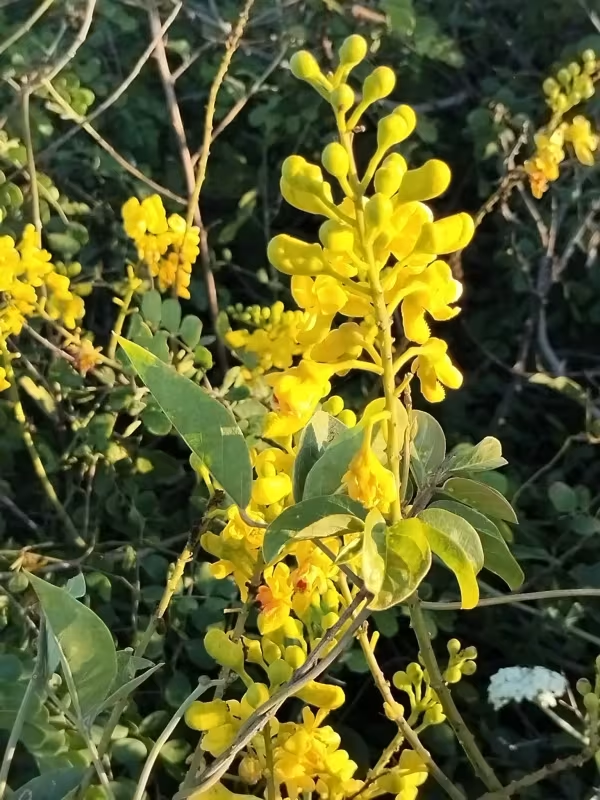
Description
Sowing dates
Tara is primarily propagated by seeds. To ensure successful germination, the hard seed coat requires scarification or soaking in warm water for several hours, which significantly improves the germination rate.
Sowing should be carried out in prepared containers or nursery beds in a protected environment. The optimal time to begin sowing is in the spring when temperatures become consistently warm.
Once seedlings reach a height of 20–30 centimeters, they can be transplanted into their permanent outdoor locations. Providing sufficient growing space is crucial for each plant, as the tree develops a wide canopy over time.
Young plants require regular irrigation during their first two years. Once established, the culture displays remarkable resilience to arid conditions, characteristic of its natural habitat in South America.
Planting density on commercial plantations varies depending on the specific objectives. Typically, growers follow a layout that ensures proper air circulation and easy access to the pods during the harvesting season.
Growing requirements
Tara belongs to the Fabaceae family. It is a small evergreen tree or shrub known for its characteristic pinnate leaves and thorny branches, which is reflected in its scientific synonym Caesalpinia spinosa.
The plant originates from the arid regions of South America, particularly Peru, where it has adapted to survive with limited water availability and in rocky, nutrient-poor soil conditions.
The crop prefers well-drained sandy or loamy soils with a neutral to slightly alkaline pH. The plant does not tolerate waterlogging, which can easily lead to root rot and systemic health issues.
Bright sunlight is essential for the normal development of the tree. In shaded areas, the growth rate decreases significantly, and the plant's yield of pods and overall vitality are reduced.
A warm climate is required for optimal health. The culture is sensitive to hard frosts, which limits its commercial cultivation to specific climatic zones or protected environments such as greenhouses in cooler regions.
Yield
The main economic value of the crop lies in its fruits — leathery pods rich in tannins. The productivity of the tree depends largely on its age and the implementation of proper agronomic practices.
Harvesting begins when the pods reach full maturity and turn a characteristic yellow-red hue. At this stage, the tannin content within the dried pods is at its absolute peak.
The tannin extracted from Tara pods is widely utilized in the leather industry to tan high-quality leather, providing it with superior elasticity and lasting durability.
Beyond leather tanning, Tara extract is in high demand in the chemical and food industries, where it serves as a stabilizer and a key ingredient for paints and specialized inks.
The economic viability of Tara plantations is driven by the longevity of the trees and a steady global demand for natural, sustainable vegetable-based tanning agents.
Main diseases and pests
Like many members of the legume family, Tara can be susceptible to specific insect pests, such as aphids or spider mites, particularly when grown under greenhouse conditions.
Fungal diseases caused by excessive humidity are a major threat to the root system. Proper irrigation management and ensuring adequate ventilation are critical for disease prevention.
Inappropriate care, including overwatering, can trigger root rot, a condition that is notoriously difficult to treat once it has advanced to later stages of the plant's life cycle.
Damage to the stems from pests or mechanical injuries during improper pruning can act as entry points for infections; therefore, it is vital to use sanitized pruning tools.
Regular monitoring of the plantations during the flowering and fruit-setting phases allows for early detection of pest infestations, helping to avoid significant crop losses.
Harvesting
Harvesting is performed exclusively by hand, as the pods are delicate and require careful handling to maintain the quality of the raw material throughout the process.
Once collected, the fruits are thoroughly dried, either under direct sunlight or in specialized industrial dryers, until the required moisture level is achieved.
After drying, the pods are sorted by quality and cleaned of debris before being sent to processing facilities for tannin extraction.
The harvest period can be spread out over time, necessitating multiple visits to the plantation to gather mature pods as they reach their optimal level of ripeness.
The dried raw material must be stored in dry, well-ventilated areas to prevent the growth of mold and ensure that the active tanning compounds remain stable over time.