
Tachigali paniculata
Tachigali paniculata
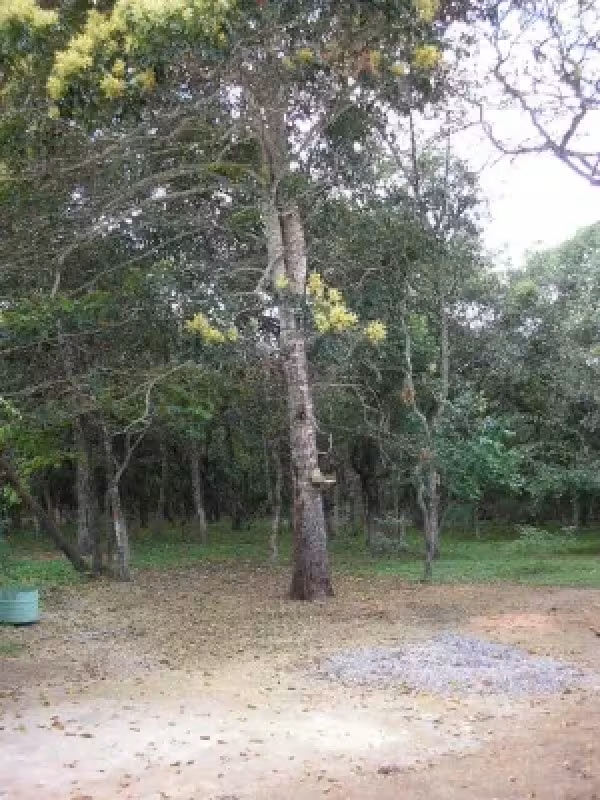
Description
Growing requirements
Tachigali paniculata is a tree species belonging to the Fabaceae family, native to the tropical rainforests of South America. It thrives in high-humidity environments, making it a key component of the Amazonian ecosystem where it plays a role in forest succession.
The plant requires well-drained, acidic soils rich in organic matter to achieve optimal growth. It is highly intolerant of waterlogging, necessitating careful site selection and drainage management in agricultural settings to ensure root health.
Climate requirements include consistently high temperatures throughout the year, as the tree is sensitive to cold snaps and frost. Light intensity is crucial for its rapid growth, as the species relies on sunlight to fuel its fast-paced development during the early stages.
Botanically, it is recognized for its ability to fix atmospheric nitrogen, contributing to soil fertility. Its structural growth allows it to compete effectively in canopy environments, and its wood quality makes it of interest for sustainable timber forestry.
In terms of agricultural use, Tachigali paniculata is often utilized in reforestation projects rather than traditional crop production. Its rapid development helps stabilize soil, prevent erosion, and restore biodiversity in degraded tropical landscapes.
Main diseases and pests
Fungal infections are the most significant threat to this species, particularly in regions with excessive rainfall. These pathogens often target the roots and lower stems, leading to decay if the trees are planted in poorly aerated or waterlogged areas.
Pests such as boring insects and foliage-eating larvae pose a consistent challenge to plantation health. These organisms can severely weaken young trees, making them susceptible to secondary bacterial infections that further inhibit growth.
Vines and fast-growing invasive weeds represent a major threat during the establishment phase. Without consistent weeding and canopy management, these competitors can choke the development of Tachigali paniculata, leading to stunted growth or mortality.
Environmental stress, including irregular climate patterns, can compromise the tree's natural resistance to diseases. Maintaining optimal plant density is a key preventative measure to improve airflow and reduce humidity around the trunks.
Integrated pest management strategies are recommended for plantation success. This involves manual monitoring and the preservation of natural predators to control insect populations without heavily relying on chemical interventions.