
Hartwig's locust
Robinia hartwigii
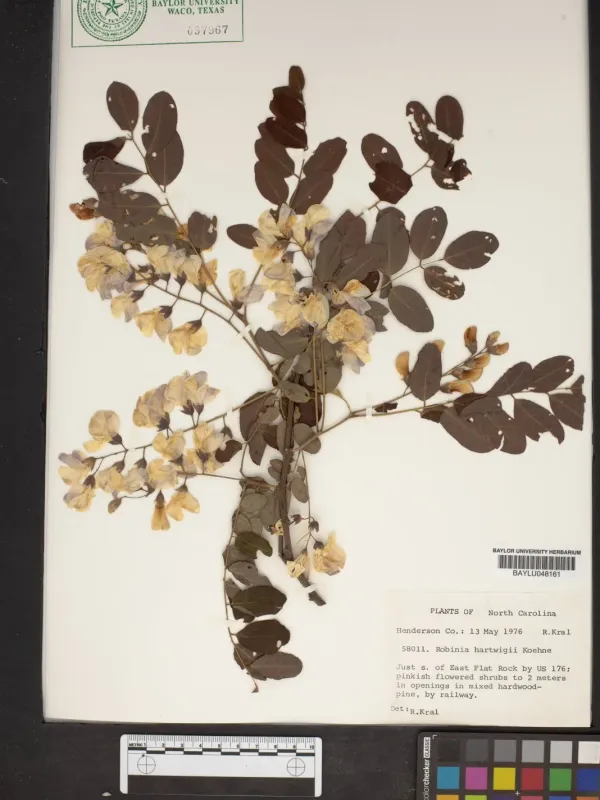
Description
Growing requirements
Hartwig's locust (Robinia hartwigii) is an ornamental woody plant belonging to the Fabaceae family. Native to North America, this species is appreciated for its elegant habit and distinct botanical characteristics that make it a standout in temperate gardens.
The tree thrives in full sun exposure, which is essential for stimulating flowering and maintaining a compact crown structure. It is relatively adaptable to different environments but performs best in sheltered locations that provide protection against harsh winds.
Regarding soil preferences, this species requires well-drained, sandy or loamy soils. It tolerates a range of pH levels but prefers slightly acidic to neutral soil conditions. Soil compaction should be avoided to ensure adequate root respiration.
The cultural practices include regular watering during the first few years after planting to establish a strong root system. Once established, the tree demonstrates a moderate level of drought tolerance, making it suitable for low-maintenance landscapes.
In terms of usage, Hartwig's locust is primarily utilized in ornamental horticulture. It serves as a beautiful focal point in parks and private gardens, valued for its delicate pinnate foliage and attractive flower clusters that appear in late spring to summer.
Main diseases and pests
Common pests affecting Robinia hartwigii include various species of aphids and scale insects, which can weaken the plant by feeding on the sap. Regular monitoring of leaf undersides is recommended to detect early infestations.
Fungal diseases, such as leaf spot and powdery mildew, may affect the tree during periods of high humidity or poor air circulation. Proper spacing between trees is crucial to mitigate these risks.
Wood-boring beetles represent a more severe threat to the tree's health. Infestations are often indicated by sawdust at the base of the trunk or dieback of individual branches, requiring immediate professional intervention.
Sanitation practices are essential for disease management. This includes pruning out infected or dead branches and disposing of fallen foliage that might harbor fungal spores through the winter season.
Boosting the tree's vigor through appropriate fertilization and preventing mechanical damage to the bark are the best ways to ensure long-term resistance against common pests and environmental stressors.