
Hardenbergia comptoniana
Hardenbergia comptoniana (Andrews) Benth.
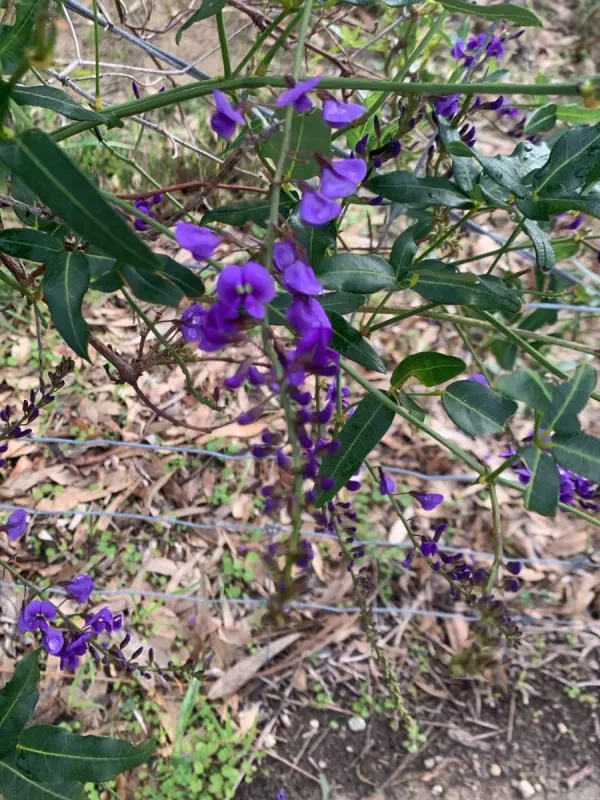
Description
Growing requirements
Hardenbergia comptoniana is a robust evergreen climber belonging to the Fabaceae family. It is native to the southwest region of Western Australia, thriving in Mediterranean-like climatic conditions.
This plant prefers a position in full sun to partial shade. In its natural habitat, it climbs over shrubs and trees, but in cultivation, it requires a sturdy trellis, fence, or pergola to support its vigorous twining stems.
Cultivation requires well-drained, sandy or loamy soil with a neutral to slightly acidic pH. Waterlogging is detrimental to this species, as it often leads to rapid deterioration of the root system.
Botanically, it is characterized by its trifoliate leaves and spectacular racemes of violet-blue flowers. The blooming period usually occurs in late winter or early spring, providing significant ornamental value.
The primary use of Hardenbergia comptoniana is ornamental landscaping. It is highly valued for vertical gardening and is often used to provide privacy screens or decorative cover for walls and fences in mild climates.
Main diseases and pests
The most common threat to the health of the plant is root rot, which is almost exclusively caused by overwatering or poor soil drainage conditions in the container or garden bed.
Spider mites are the most frequent insect pests, especially in indoor environments where low humidity levels encourage their rapid proliferation on the foliage.
Other potential pests include scale insects and mealybugs, which can cause stunted growth if they are allowed to establish colonies on the stems and leaves.
Effective pest management involves regular monitoring and the prompt application of horticultural oils or systemic insecticides if an infestation is detected early.
Maintaining proper hygiene, including removing dead or decaying plant material and ensuring adequate airflow, is essential to keep the plant resilient against fungal pathogens.