
Hardenbergia violacea
Hardenbergia violaceae (Schneer.) F.C. Stearn
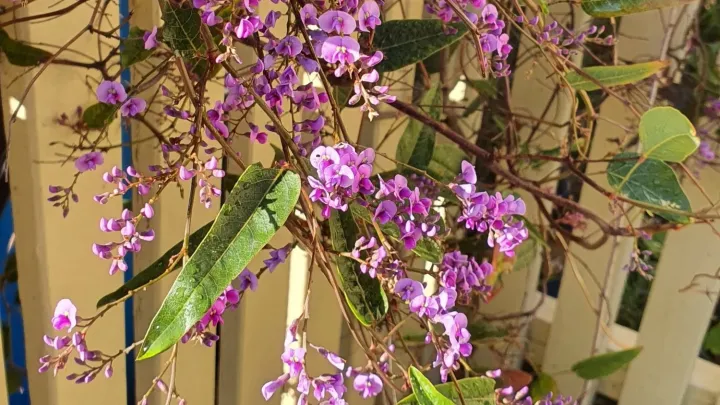
Description
Sowing dates
Propagation of Hardenbergia violacea is typically achieved through seeds or semi-hardwood cuttings. Seeds should be scarified or soaked in warm water to break dormancy and ensure faster germination.
Sow seeds in a well-draining, sterile potting mix during early spring. Maintain a consistent temperature between 20°C and 25°C, keeping the substrate moist but not waterlogged until sprouts emerge.
Cuttings should be taken from vigorous, healthy vines during the active growth season. Dipping the ends in rooting hormone before planting in a propagation medium significantly increases the success rate.
Young plants are sensitive to root disturbance, so they should be transplanted with caution. Using peat or fiber pots that can be planted directly into the soil is a recommended practice to avoid shock.
Establishment of the root system is critical during the first few months. Ensure that the young plants are kept in a protected environment until they are strong enough for outdoor planting or larger pots.
Growing requirements
Hardenbergia violacea, a member of the Fabaceae family, is an evergreen woody vine native to Australia. It is widely valued as an ornamental climber due to its vibrant pea-like flowers.
The plant thrives in bright, filtered light. While it can tolerate full sun in cooler climates, protection from intense afternoon heat is necessary to prevent leaf scorching in warmer regions.
Soil requirements involve a loose, well-draining structure with a neutral to slightly acidic pH. Incorporating organic matter such as compost helps maintain fertility and moisture retention without compromising drainage.
Climate tolerance is restricted; the plant is not frost-hardy. In regions with freezing winters, it must be grown in containers and moved indoors or into a greenhouse before the first frost arrives.
Watering should be regular during the growth phase, allowing the top layer of the soil to dry out between applications. During winter dormancy, reduce watering to prevent rot in the root zone.
Main diseases and pests
Spider mites are the most prevalent pests affecting this vine, especially in indoor settings with low humidity. They can cause stippling and yellowing on leaves, which may eventually lead to premature leaf drop.
Mealybugs can also infest the stems and leaf nodes. Regular monitoring and the application of neem oil or insecticidal soap are effective strategies for managing these infestations before they spread.
Root rot caused by fungal pathogens is a significant threat if the soil remains waterlogged. Ensuring that the container or planting site has an excellent drainage system is the best preventative measure.
Leaf spot diseases can occur if the foliage stays wet for extended periods in poorly ventilated areas. Avoiding overhead watering helps keep the leaves dry and reduces the incidence of fungal growth.
Pruning after the flowering season is not only essential for shaping the plant but also for removing dead or weak wood that could harbor pests and diseases, keeping the plant vigorous.