
Griffonia simplicifolia
Griffonia speciosa
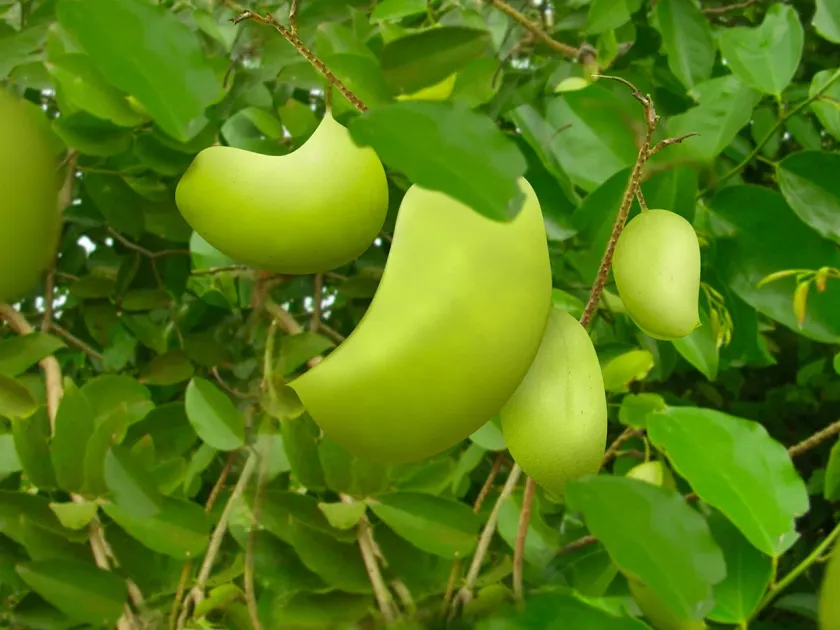
Description
Sowing dates
Griffonia simplicifolia is a woody climbing shrub native to the tropical regions of West and Central Africa. It is a member of the Fabaceae family, highly valued for its seeds.
Propagation is typically done through seeds. Due to their hard seed coat, pre-sowing treatment such as scarification is essential to ensure a high germination rate.
Seeds are sown in seedbeds or nursery containers filled with light, well-draining soil. Maintaining a temperature range of 25–30 degrees Celsius is optimal for success.
Seedlings remain in the nursery phase for several months until they are robust enough for field transplanting. Proper shading during this stage is vital for plant survival.
When transplanting, spacing is critical to provide adequate light and airflow as the shrubs grow into their mature, climbing, or sprawling form.
Growing requirements
As a tropical species, this plant requires high, consistent temperatures year-round. It is not frost-tolerant and thrives in climates with high annual rainfall.
Well-drained, fertile soil is necessary for healthy growth. Waterlogging must be strictly avoided, as it leads to root rot and other fungal diseases that can devastate the plantation.
The plant performs best under partial shade during its early stages but can tolerate more sunlight as it matures. Humidity levels should remain consistently high.
Consistent moisture is required, especially during the flowering and pod-forming stages. Drought stress during these critical phases can significantly reduce the potential harvest.
Regular fertilization with organic compost or balanced NPK fertilizers is recommended to maintain vigorous growth and ensure maximum seed yield over the season.
Yield
The economic value of Griffonia simplicifolia lies in its seeds, which contain high levels of 5-hydroxytryptophan (5-HTP), a precursor to the neurotransmitter serotonin.
Shrubs usually reach their productive stage after 3 to 5 years. Harvest timing is crucial because pods do not ripen simultaneously, requiring repeated visits to the plantation.
Harvesting is labor-intensive as it involves hand-picking mature pods. Efficient logistics and organization are required to process the seeds immediately after picking.
Post-harvest processing involves threshing, cleaning, and gentle drying to prevent mold growth. Moisture content must be reduced to levels that ensure safe storage stability.
Sustainable harvesting methods ensure the longevity of the plant, allowing it to produce seeds for many years without significant decline in vitality.
Main diseases and pests
Leaf-eating insects are common pests that can hinder growth. Integrated pest management (IPM) is recommended to control these populations without using harsh chemicals.
Fungal diseases like Fusarium wilt represent a major threat, particularly in soils with poor drainage. Proactive soil management is the best defense against these pathogens.
Bacterial leaf spot can also occur in environments with high humidity and poor air circulation. Thinning out dense foliage helps mitigate this risk.
Root-knot nematodes can damage the root system, causing yellowing and stunted growth. Soil solarization or crop rotation techniques are often used in plantation planning.
- Regular monitoring for pest outbreaks.
- Proper site selection to ensure excellent drainage.
- Sanitary pruning of infected branches.
- Using organic mulching to regulate soil health.
Harvesting
Harvesting is carried out when the pods have turned from green to a dark, dry consistency. If left too long, the pods may shatter, leading to significant crop loss.
After collection, the pods must be kept in breathable containers to avoid fungal growth, especially in the high-humidity climates where the crop is grown.
Seed cleaning is performed to remove pod fragments and other organic debris. Quality control at this stage is vital to meet pharmaceutical grade standards.
Drying must be conducted in the shade or in low-heat mechanical dryers. Excessive heat can degrade the chemical composition of the 5-HTP within the seeds.
Once dried to the correct moisture level, the seeds are stored in cool, dark, and dry warehouses to preserve their medicinal properties until they are exported or processed.