
Hoffmanseggia falcaria
Hoffmanseggia falcaria
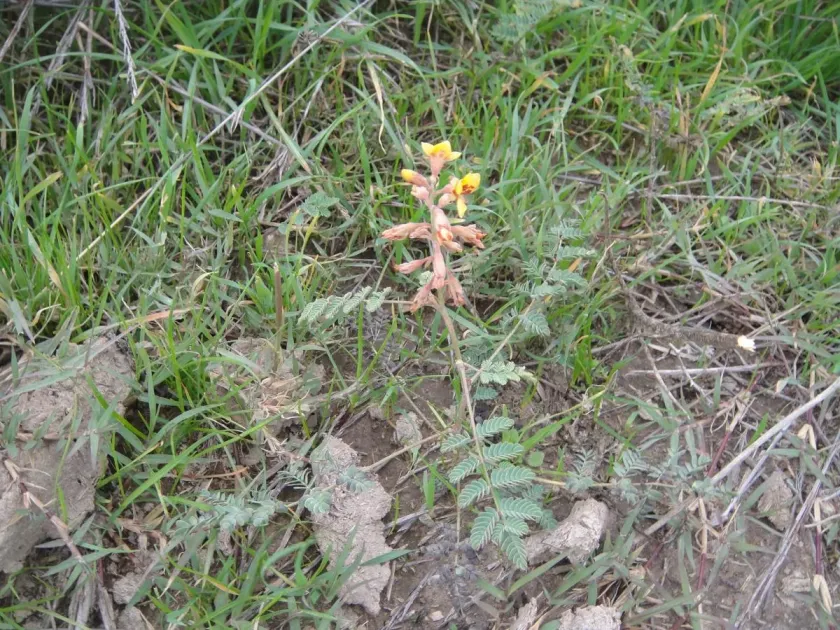
Description
Sowing dates
Hoffmanseggia falcaria is a perennial plant that requires specific environmental conditions for successful establishment during the initial sowing season.
Given the hard seed coat typical of this genus, mechanical scarification is highly recommended to improve germination rates in field conditions.
Sowing should be performed when soil temperatures are stable, aiming for a depth of 2–3 cm to balance moisture accessibility with light requirements.
During the first year, the crop invests heavily in its root system, resulting in slow above-ground growth that necessitates vigilant weed management.
Proper spacing between rows is essential to facilitate mechanical weeding and ensure that the plants have sufficient space to develop their characteristic foliage.
Growing requirements
As a member of the Fabaceae family, this species thrives in arid and semi-arid environments, demonstrating exceptional drought resistance.
The crop prefers well-drained, sandy or loamy soils and performs poorly in heavy, waterlogged conditions where root respiration is restricted.
It is well-adapted to high light intensities and can tolerate significant temperature fluctuations throughout the growing season.
Soil pH levels should be managed to ensure they remain near neutral or slightly alkaline, which is optimal for the plant's nutrient uptake.
The plant exhibits potential for phytoremediation and soil improvement due to its robust root system that stabilizes the substrate.
Main diseases and pests
Common soil-borne pests, such as wireworms, can cause significant damage to the plant's root neck, particularly during the seedling establishment phase.
Fungal pathogens like powdery mildew may appear during periods of high humidity combined with stagnant air, potentially reducing the overall quality of the forage.
Aphid infestations require integrated pest management strategies to prevent the transmission of viral pathogens that can stunt plant growth.
Crop rotation protocols are strictly advised to avoid the buildup of soil pathogens common to leguminous plants in continuous cropping systems.
Field hygiene, including the removal of infected plant debris, is a crucial practice for maintaining long-term plantation health.
Harvesting
Harvesting for forage should be conducted during the peak flowering stage to ensure the highest protein content and nutritional value of the biomass.
For seed production, harvesting must be timed carefully to prevent the natural dehiscence of pods, which can lead to significant yield losses in the field.
Modern harvesting machinery should be adjusted to a specific cutting height to prevent damage to the plant's perennial root crown.
Drying procedures must be efficient to prevent spoilage, as the thick stems of the plant require extended time to reach proper moisture levels for storage.
Proper post-harvest conditioning is essential for maintaining the viability of seeds and the overall feed quality of the harvested hay.