
Holdt's locust
Robinia holdtii
Description
Growing requirements
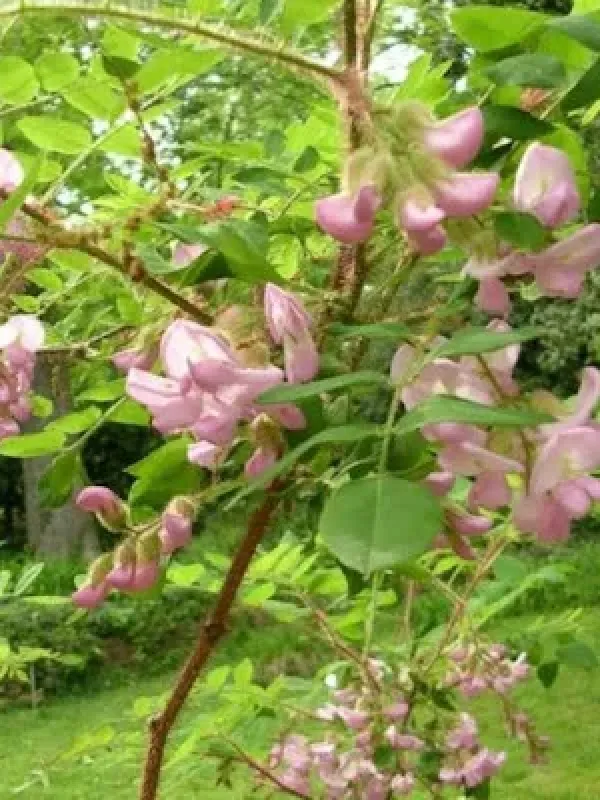
Holdt's locust (Robinia holdtii) is a distinct hybrid tree belonging to the Fabaceae family. It is a cross between the black locust (Robinia pseudoacacia) and the New Mexico locust (Robinia neomexicana). This botanical combination results in a plant that balances the vigorous growth of the former with the aesthetic appeal and cold tolerance of the latter.
Originating from North American cross-breeding programs, this species has been introduced in various temperate regions for both ornamental and practical forestry purposes. It thrives in various climates, showing significant resilience to harsh environmental conditions, which makes it a preferred choice for landscape reclamation projects.
The culture requires full sun exposure to maintain its density and flowering potential. Soil preferences include well-drained, slightly acidic to neutral substrates. Being a legume, it contributes to soil fertility by nitrogen fixation, which is beneficial for surrounding flora and long-term soil health in agroforestry systems.
Agricultural management for Robinia holdtii focuses on structural pruning during its early life stages to prevent codominant stems, which can be prone to storm damage. Irrigation is primarily required during the first two growing seasons, after which the plant becomes highly drought-tolerant and capable of sustaining itself.
Beyond its visual beauty, the tree is highly regarded for its utility. It serves as an excellent nectar source for bees, provides erosion control on slopes due to its extensive root system, and produces high-quality wood. Its ecological versatility makes it a valuable asset for sustainable land management.
Main diseases and pests
Holdt's locust is susceptible to standard locust pests and fungal diseases, particularly trunk cankers and heart rot, especially in stagnant air conditions or high-humidity environments. Maintaining proper tree spacing and avoiding wounding the main trunk are essential preventative strategies against fungal colonization.
In terms of insect threats, borers and leaf miners can occasionally damage the foliage and woody tissues. Management protocols include periodic inspections during the active growing season and applying integrated pest management (IPM) practices, utilizing targeted biological controls whenever possible to preserve the local pollinator population.