
Faidherbia albida
Faidherbia albida
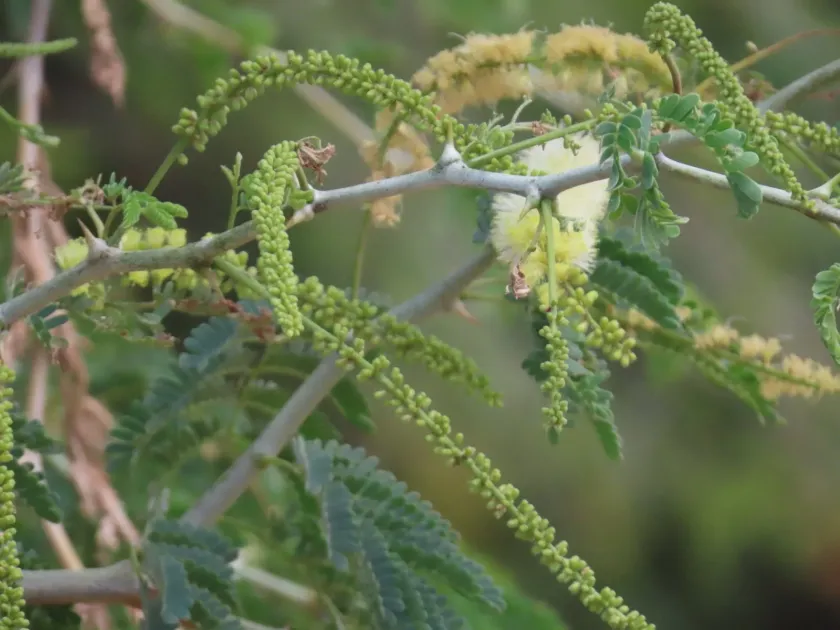
Description
Sowing dates
Propagation of Faidherbia albida is primarily achieved through seeds. The seeds have a hard coat, so mechanical scarification or soaking in hot water is essential to trigger germination.
Sowing in nurseries usually begins at the start of the rainy season. Young seedlings require consistent care, including protection from weeds and adequate irrigation during their first years of establishment.
Direct field planting is rarely successful due to slow initial growth rates. It is recommended to raise seedlings in containers for 3 to 6 months before transplanting them to their permanent location.
When planting in agroforestry systems, trees should be spaced widely, typically 10 to 20 meters apart, to avoid over-shading crops while providing essential nutrient cycling.
Applying phosphorus-rich fertilizer during transplanting helps stimulate strong root development, which is critical for the tree to access deep soil moisture in arid environments.
Growing requirements
Faidherbia albida is a prominent member of the Fabaceae family, native to Africa and the Middle East. It is highly valued for its nitrogen-fixing capabilities and soil improvement properties.
The tree exhibits a unique trait known as reverse phenology, where it sheds its leaves during the rainy season and remains green during the dry season, benefiting intercropped plants.
It thrives in deep, well-drained alluvial soils. Its deep taproot allows it to reach underground water tables, making it highly drought-tolerant once it is fully established.
The species prefers sun-exposed areas and is adapted to climates with 250 to 1000 mm of annual rainfall. It performs best in temperatures between 20°C and 30°C but can tolerate heat.
While tolerant of various soil types, it performs poorly in extremely heavy clay or severely waterlogged soils, as these conditions inhibit the development of its specialized root system.
Main diseases and pests
Seed-boring insects, particularly bruchid beetles, pose a major threat to seed viability. They infest the pods, consuming the embryos and significantly reducing germination potential.
Termites are significant pests for young seedlings, often stripping bark and attacking the roots, which can cause the total loss of newly planted trees if not managed.
Fungal diseases, including leaf spots, may occur in humid conditions. Maintaining good air circulation in nurseries and avoiding overcrowding are essential preventative measures.
Uncontrolled livestock grazing is the greatest threat to natural regeneration. Animals consume young saplings, preventing them from reaching the height necessary for survival.
Integrated pest management and the use of physical barriers around young trees are the most effective strategies for protecting plantations from both domestic livestock and local wildlife.
Harvesting
The primary harvest products include pods and leaves, which are crucial high-protein fodder sources for livestock during the driest months when other grazing options are scarce.
Farmers harvest fallen pods manually from under the tree canopy. These pods are highly palatable and nutritious, serving as an excellent supplement for cattle, goats, and sheep.
The foliage acts as an organic fertilizer, depositing nutrients into the soil. Research consistently shows that cereal yields are higher under the canopy of Faidherbia albida than in open fields.
The timber of the tree is used for rural construction, furniture, and tools. While not exceptionally hard, it is durable enough for various local household applications.
Pruning is a common management practice. Controlled harvesting of branches provides immediate forage for animals while promoting the health and vitality of the tree canopy.