
Egyptian rattlepod
Crotalaria aegyptiaca
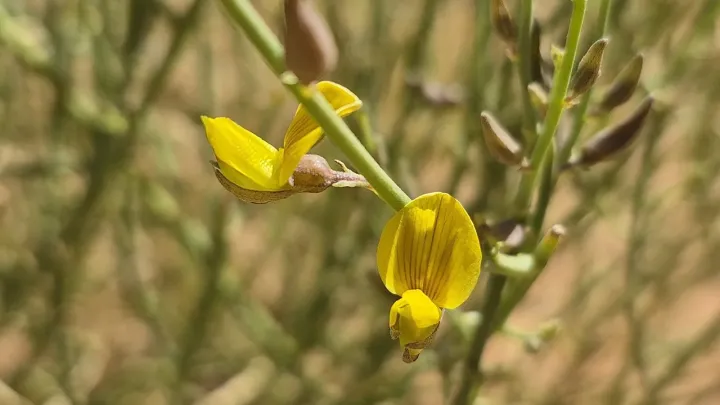
Description
Growing requirements
Crotalaria aegyptiaca, known commonly as the Egyptian rattlepod, is a perennial legume species native to the arid and semi-arid regions of North Africa and the Arabian Peninsula. It belongs to the Fabaceae family and is well-adapted to harsh environmental conditions.
The plant is characterized by a deep, taproot system that allows it to survive in environments with very low water availability. It thrives under intense sunlight and high temperatures, making it a valuable subject for study in desert agricultural research.
Soil requirements for this species are minimal, as it prefers well-drained, sandy, or rocky soils that prevent waterlogging. It is highly tolerant of saline conditions, which are common in its natural habitats across Egypt and neighboring countries.
Agronomic practices focus on minimal disturbance, as the plant acts as a pioneer species in restoring degraded landscapes. It plays a significant role in improving soil fertility through symbiotic nitrogen fixation, even in nutrient-poor environments.
Agricultural use is primarily focused on soil conservation and the rehabilitation of desertified lands. Its ability to maintain structural integrity in the soil helps to reduce wind erosion, protecting topsoil in vulnerable ecosystems.
Main diseases and pests
The primary threats to Crotalaria aegyptiaca include fungal pathogens that thrive in conditions of excessive moisture. Root rot is a significant concern if the soil does not provide adequate drainage, especially during unusual rainfall events.
Insect pests such as seed-feeding beetles can significantly impact the reproductive success of the plant. These pests target the pods, reducing the yield of viable seeds needed for propagation and ecological restoration projects.
Aphid infestations are occasionally reported on tender young shoots during the growing season. While they rarely kill the plant, they can transmit viral pathogens that stunt overall development and lower resilience.
Foliage-feeding insects can cause extensive damage to leaves, which limits the plant's photosynthetic capacity. In natural habitats, these pests are usually kept in check by native predator populations.
Management strategies involve selecting well-drained sites and ensuring the spatial isolation of plantings. Chemical controls are generally avoided to preserve the delicate balance of the desert ecosystems where this plant grows.