
Ebenopsis
Ebenopsis
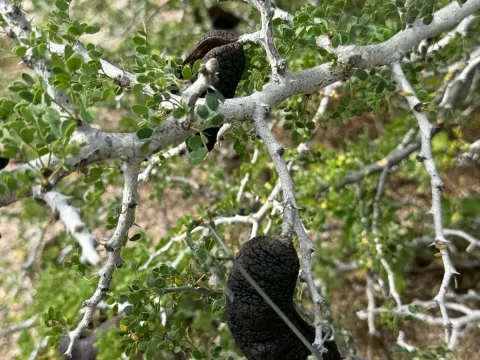
Ebenopsis is a genus of flowering plants belonging to the Fabaceae family, closely related to the Pithecellobium group. These plants typically manifest as evergreen or deciduous trees and shrubs, structurally adapted with thorny branches and feathery, bipinnate leaves.
What the section contains

Ebenopsis
Native to arid and semi-arid regions of North and Central America, specifically Mexico and parts of the Southwestern United States, the genus is highly specialized for survival in desert ecosystems. Its biology is centered on resource conservation and drought tolerance.
For optimal growth, Ebenopsis requires well-drained, calcareous, or rocky soil conditions. The plant is exceptionally hardy against low water availability and thrives in environments where most traditional agricultural crops would fail due to water stress.
Climate requirements include high solar intensity and warm temperatures throughout the growing season. While the plant can tolerate short intervals of light frost, it is susceptible to severe, prolonged cold, which dictates its geographical distribution in landscape planting.
Agronomic management is minimal, focusing on providing full sun exposure and preventing soil compaction. Seeds are the primary propagation method; however, the seed coat is naturally hard and requires mechanical or chemical scarification to improve germination rates in a controlled environment.
The primary economic and agricultural use of Ebenopsis is within xeriscaping and sustainable landscape design. Its ability to provide shade and structural beauty in arid climates makes it a preferred choice for dry-land restoration and residential garden architecture.
The plant acts as an important pollinator attractor, contributing to local biodiversity by providing forage for various bee species during its flowering phase. Furthermore, the wood of some Ebenopsis species is noted for its density and historical use in artisanal woodworking.