
Hairy canary clover
Dorycnium hirsutum (L.) Ser.
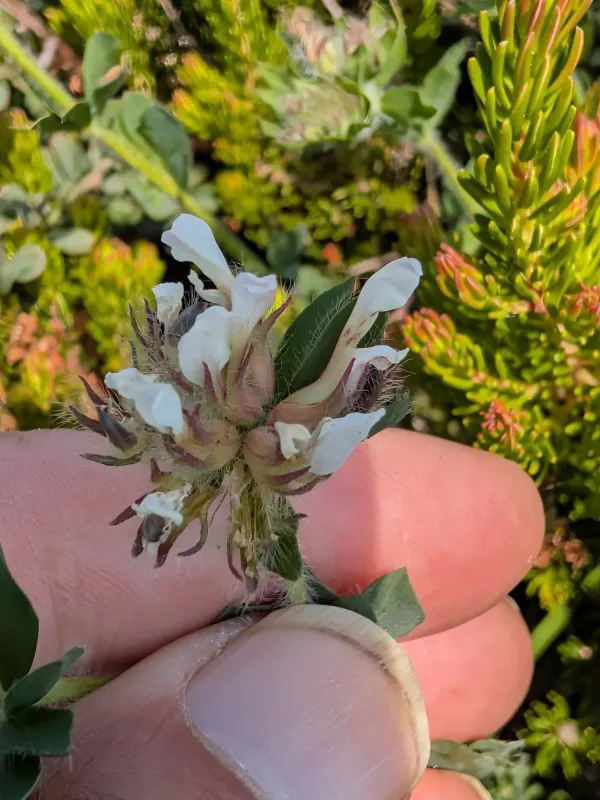
Description
Sowing dates
Sowing of Hairy canary clover should be performed in early spring once soil temperatures are consistently above freezing to ensure steady germination.
It is crucial to prepare a fine and weed-free seedbed to ensure the small seeds have optimal contact with the soil for successful establishment.
Seed scarification is often recommended prior to sowing, as the seeds have a hard coat that may otherwise result in uneven or delayed emergence.
The seeds should be sown at a shallow depth of approximately 1 to 2 centimeters to provide enough cover while allowing light to reach the developing shoots.
Spacing should be managed to prevent initial overcrowding, allowing the plant enough room to develop its deep root system during the first growing season.
Growing requirements
Dorycnium hirsutum belongs to the Fabaceae family and is highly valued for its ability to thrive in harsh, Mediterranean-like environments.
The species demonstrates remarkable drought tolerance, making it an excellent choice for planting on rocky, sandy, or shallow alkaline soils where other crops fail.
Full sunlight exposure is necessary for the plant to maintain its structural integrity and produce abundant foliage throughout the summer months.
It is capable of fixing atmospheric nitrogen, which helps improve soil fertility and makes it a sustainable option for low-input agricultural systems.
The plant prefers well-drained soil and is sensitive to waterlogged conditions, which can lead to root rot if the soil remains saturated for long periods.
Yield
The yield potential of Hairy canary clover is best realized when it is integrated into semi-arid pasture systems, providing reliable forage during dry spells.
While biomass accumulation is slower compared to intensive forage crops, the nutritional value of its leaves remains consistently high under stress.
Yields are typically measured in terms of dry matter production, which proves quite stable across several years due to the plant's perennial nature.
The crop's contribution to secondary production is significant, as it provides high-protein biomass that improves livestock weight gain in harsh terrains.
Harvestable yields can be sustained for a long period with appropriate grazing management, ensuring the longevity of the plant population in the field.
Main diseases and pests
The primary threats to this culture include root-pathogenic fungi which thrive under conditions of poor soil drainage and excessive winter rainfall.
Pests such as weevils can cause damage to the leaf tissue and floral structures, potentially reducing the overall quality of the forage yield.
Powdery mildew is occasionally observed during periods of high humidity and heat, impacting the aesthetic and nutritional quality of the canopy.
Weed management during the seedling stage is critical, as young plants lack the competitive ability to outgrow fast-developing annual weeds.
Effective prevention of disease involves crop rotation and site selection that avoids low-lying areas prone to prolonged moisture accumulation.
Harvesting
Harvesting for fodder is optimally timed during the late budding phase to capture the best balance between protein content and total biomass.
If the goal is seed production, the pods should be monitored carefully for maturity; harvesting should occur just as they begin to dry to prevent shattering.
Machinery should be adjusted to a cutting height that preserves the basal parts of the stems, promoting faster regrowth after the harvest.
Post-harvest management involves rapid drying to maintain the nutrient density of the hay and prevent degradation by solar radiation.
Correct harvest techniques ensure the plant remains productive for subsequent years, maintaining the field's overall health and sustainability.