
Daviesia arborea
Daviesia arborea
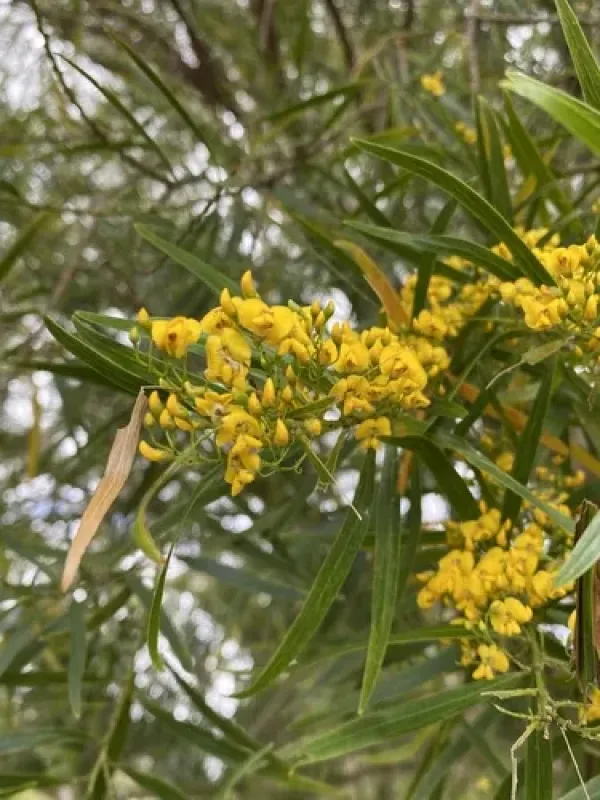
Description
Growing requirements
Daviesia arborea is a distinct woody species belonging to the legume family, Fabaceae. Native to the eastern regions of Australia, it generally assumes the form of a large shrub or a small tree, adding unique structural value to its natural habitat.
The plant is adapted to the specific climatic conditions of eastern Australia, where it thrives in open forest environments and rocky terrain. Its ecological role is significant as it participates in nitrogen fixation, which supports the overall soil health of the ecosystem.
Botanically, the species is recognized for its modified foliage, known as phyllodes, which are evolutionary adaptations to minimize water loss. The flowers follow the typical papilionaceous structure of the Fabaceae family, usually displayed in vibrant yellow and brown hues.
For cultivation, it requires excellent soil drainage and exposure to full sun. It is particularly sensitive to soil composition, preferring substrates that are low in phosphorus, which is common for many Australian native plant species grown outside their natural range.
The primary use of Daviesia arborea is within the field of ornamental horticulture and specialty gardening. It is highly valued in xeriscaping projects for its resilience to dry spells and its attractive architectural form, making it a sustainable choice for appropriate climatic zones.
Main diseases and pests
The most significant threat to Daviesia arborea is the group of soil-borne pathogens, particularly those responsible for root rot in wet conditions.
Insect pests, including scale insects and mealybugs, are known to infest the plant, potentially weakening it if left unmanaged over long periods.
Fungal leaf spot diseases may occur in environments with high humidity and poor air circulation around the canopy of the tree.
Proper site selection is the best defensive strategy to ensure the longevity of the plant, focusing on airflow and drainage capacity.
Avoiding excessive fertilization, particularly with high phosphorus content, is essential to prevent physiological stress and secondary infections.