
Daviesia mimosoides
Daviesia mimosoides
Description
Growing requirements
Daviesia mimosoides, commonly known as Narrow-leaf Bitter-pea or snake wood, belongs to the Fabaceae family. It is a perennial, evergreen shrub native to the southeastern regions of Australia, primarily found in dry sclerophyll forests.
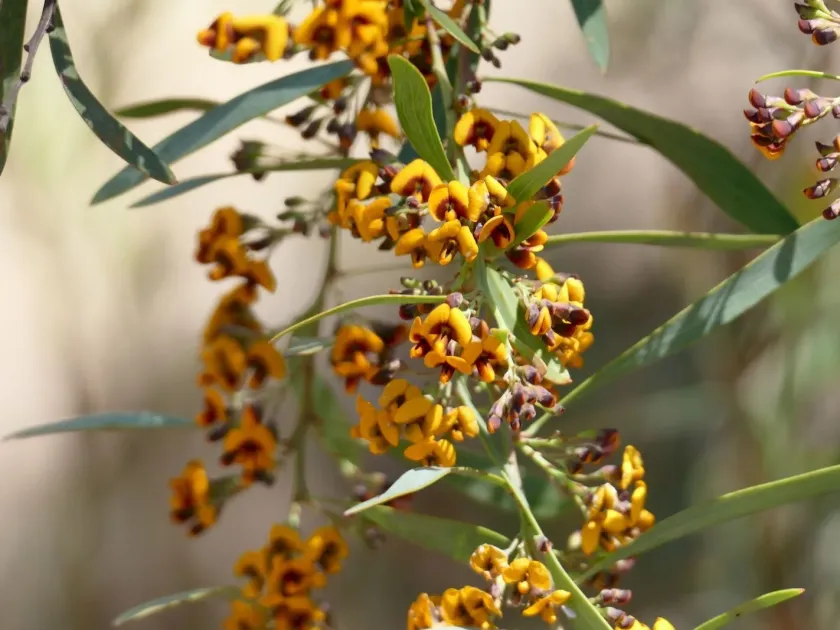
The plant is characterized by its stiff, phyllode-like structures that function as foliage. These leaves are narrow and leathery, an adaptation that allows the plant to withstand arid conditions and intense sunlight while minimizing water loss.
For successful growth, Daviesia mimosoides requires well-draining soil, ranging from sandy loam to rocky substrates. It thrives in locations with full sun exposure and is generally tolerant of poor soil fertility, which is typical for its natural habitat.
Cultivation practices involve minimal fertilization, as the plant is adapted to nutrient-deficient soils and can fix nitrogen via symbiotic root bacteria. Careful water management is essential to prevent root rot, especially in humid environments.
In landscaping, this species is valued for its hardiness, attractive yellow and brownish pea-shaped flowers, and its ability to act as a drought-tolerant screen or hedge in xeriscape garden designs.
Main diseases and pests
The most significant threat to Daviesia mimosoides is Phytophthora root rot, which is often exacerbated by poor drainage and excessive irrigation. Ensuring adequate drainage is the primary defense strategy for growers.
Pests such as scale insects and spider mites can infest the plant, particularly in sheltered or poorly ventilated environments. Regular inspection of the phyllodes can help identify early signs of these infestations.
Fungal leaf spots can occur if the plant is grown in areas with poor airflow and high humidity. Pruning to open the canopy is recommended to improve air circulation and reduce the incidence of disease.
Native leaf-chewing insects in its home range can occasionally cause cosmetic damage. However, in most cases, the plant's robust nature allows it to recover without the need for extensive chemical intervention.
Environmental stress, such as sudden flooding or extreme temperature fluctuations, can compromise the plant's natural immunity, making it more susceptible to opportunistic pathogens and secondary invaders.