
Cyclocarpa stellaris
Cyclocarpa stellaris
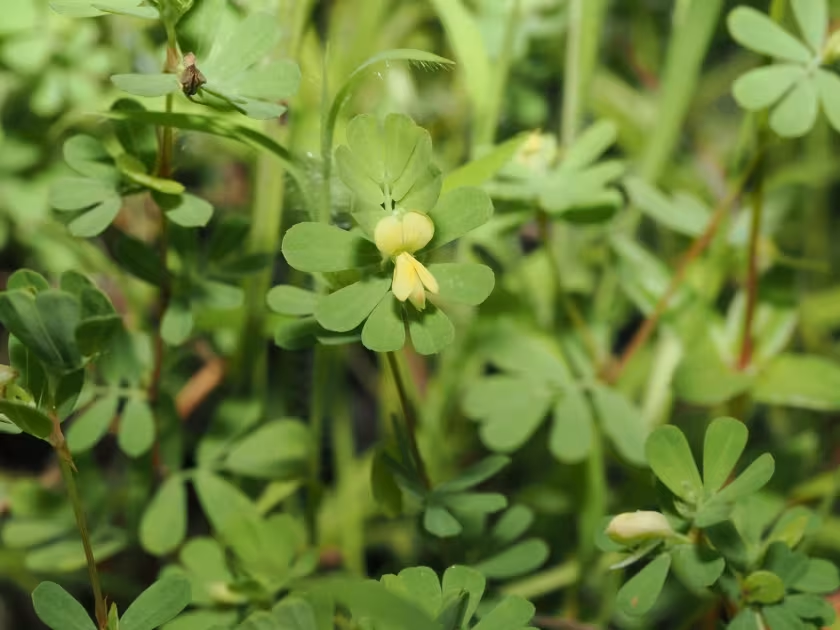
Description
Sowing dates
Cyclocarpa stellaris is a herbaceous plant belonging to the legume family (Fabaceae). In its natural habitat, it acts as an annual or perennial plant, demonstrating high adaptability to environments with sufficient moisture levels.
The seeds of this crop require specific conditions for germination, primarily linked to soil temperature and moisture content. The optimal sowing time is when temperatures remain consistently between 15 and 18 degrees Celsius.
During cultivation, providing enough space for each plant is crucial as Cyclocarpa tends to have vigorous vegetative growth. The recommended sowing depth is 1 to 2 centimeters in a well-structured soil bed.
In tropical climates, sowing is performed at the beginning of the rainy season to ensure a quick start for root system development. Fields should be cleared of weeds to minimize competition during the early stages of establishment.
As seedlings emerge, thinning is required to ensure optimal density for a healthy stand. Calculating the correct sowing time allows the crop to fully utilize available water resources throughout the growing season.
Growing requirements
This crop has high demands for soil moisture and prefers clay or loam soils with good water-holding capacity. Cyclocarpa stellaris is frequently found in river floodplains, which indicates its affinity for wet habitats.
The optimal soil pH for successful development lies in the slightly acidic to neutral range. The plant performs poorly under prolonged drought conditions, requiring consistent irrigation when grown in environments with limited rainfall.
Light intensity is a critical factor influencing photosynthetic rate and biomass accumulation. While it can tolerate partial shade, the best results are achieved under full sunlight throughout the day.
Mineral nutrition requirements include sufficient levels of nitrogen and phosphorus, typical for legumes. Applying organic fertilizers before planting significantly boosts the productivity of the green biomass.
Temperature regimes should be stable without sharp fluctuations. In temperate latitudes, successful cultivation is only possible within controlled greenhouse environments to maintain a suitable microclimate.
Yield
The primary use of Cyclocarpa stellaris is the production of green biomass for forage. Yield depends directly on moisture availability and the soil's inherent fertility within the cultivation area.
In favorable conditions, the plant forms a dense mat of leaves and stems, providing a high yield of dry matter per unit area. High regeneration capacity after harvesting allows for multiple cuttings during a single season.
Productivity indicators vary depending on the specific ecotype and its genetic characteristics. Research indicates that with proper management, biomass yield is comparable to other legume forages used in tropical agriculture.
Preserving nutritional value during drying is important for long-term storage. Harvesting must be handled carefully to avoid damaging the root system, which is essential for subsequent regrowth of the plant.
Nutritional analysis shows high protein content in the foliage, making it a valuable feed component for livestock. Maximum yield is typically achieved during the flowering phase before seed formation begins.
Main diseases and pests
The crop is susceptible to various fungal diseases, especially in high-humidity conditions with poor airflow. Mold and root rot are significant threats if agricultural practices regarding moisture control are neglected.
Pests that feed on tender leaves, such as caterpillars of various lepidopteran species, can cause considerable damage. Aphid infestations may also occur, which can lead to viral transmission within the stand.
Preventive measures include crop rotation and the maintenance of proper soil drainage to avoid pathogen development. The use of systemic fungicides is recommended only in cases of widespread disease outbreaks.
Regular monitoring is essential from the moment of emergence. Prompt removal of infected plants helps to keep the disease pressure low and protects the healthy parts of the stand.
Overall plant resistance depends on proper care; a well-developed plant naturally resists many environmental stressors. Choosing the right planting site minimizes the impact of potential pests and pathogens.
Harvesting
Harvesting Cyclocarpa stellaris is typically conducted just before the peak of seed production to ensure maximum nutrient accumulation. Mechanized harvesting is possible if the field is level and free of major obstacles.
Cut material requires immediate processing or drying because high moisture content encourages rapid spoilage. For high-quality hay, drying should occur out of direct sunlight to maintain the color and nutrient profile.
When harvesting for seeds, the process begins after the pods have fully matured and changed color. Timeliness is critical because overripe pods tend to crack open and disperse their seeds prematurely.
Post-harvest seed cleaning and drying are necessary to prevent fungal growth and ensure long-term viability. Storage should be in cool, dry conditions using airtight containers to preserve seed quality.
A well-planned harvest strategy ensures the preservation of the collected product while promoting favorable conditions for the crop's regrowth in the following cycle.