
Colvillea racemosa
Colvillea racemosa Bojer
Description
Growing requirements
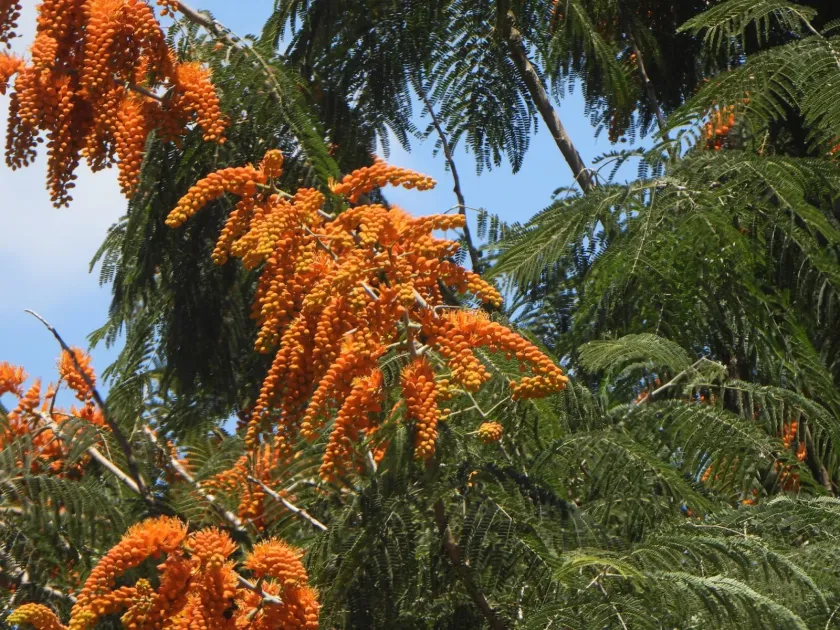
Colvillea racemosa is an impressive deciduous tree belonging to the Fabaceae family. Known for its massive, feathery foliage and spectacular, bright orange, grape-like flower clusters, it is a prized ornamental species in tropical regions.
Native to Madagascar, the tree thrives in tropical climates characterized by warm temperatures throughout the year. It has been introduced to various global regions with similar climatic conditions, including parts of India and tropical America.
The species requires deep, well-draining soil rich in organic matter. While it is tolerant of various soil types, it performs best in environments where moisture is balanced, preventing both extreme drying and waterlogging.
For optimal health, the tree requires full sun exposure. It is highly sensitive to frost, making it unsuitable for open-field cultivation in temperate zones without strict protection or greenhouse conditions during the winter months.
The tree exhibits moderate growth rates and requires space to spread its wide crown. Agronomic management involves regular monitoring of soil moisture, especially during the establishment phase, to ensure proper root development.
Main diseases and pests
Colvillea racemosa can be susceptible to common garden pests such as aphids and mealybugs. These insects often cluster on younger, succulent growth and require targeted insecticidal soaps or systemic treatments.
Root pathogens and fungal rots represent significant threats if the soil drainage is inadequate. Managing irrigation cycles is essential to prevent the accumulation of excess water around the root zone, which can lead to rapid decline.
Foliar diseases, including various leaf spots, may appear during prolonged wet weather. Improving air circulation around the canopy is a critical preventive measure that reduces the success rate of fungal spore colonization.
In some regions, borers may attack the trunk or main branches. Regular inspections and the prompt removal of dead or infested wood can prevent these pests from causing significant structural damage to the tree.
Maintaining high plant vigor through correct fertilization helps the tree resist environmental stressors. Balanced nutrients support not only flower production but also the natural resilience of the tree against secondary infections.
Harvesting
The primary utility of Colvillea racemosa is its aesthetic contribution to landscape architecture. Its ability to create a massive floral display makes it a preferred choice for large park installations and botanical gardens.
In terms of propagation, seeds are harvested from mature pods that dry on the tree. These pods should be carefully collected, and seeds must be properly cleaned and scarified before planting to enhance germination rates.
Although not a primary timber crop, the wood is of decent quality. However, the preservation of the living tree for its ornamental value remains the priority over any industrial use of the wood or biomass.
Cultural management includes post-flowering pruning to remove spent stalks and manage the tree's architecture. This practice ensures better branch structure and enhances the visual impact of the subsequent flowering season.
Modern nursery practices often focus on containerized growth for local distribution. By maintaining appropriate spacing and container size, nurseries can provide high-quality specimens for commercial landscaping projects.