
Siberian peashrub
Caragana arborescens Lam.
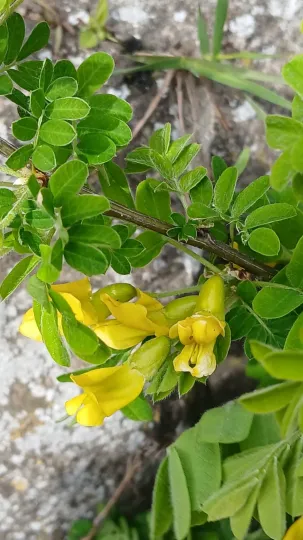
Description
Sowing dates
Sowing of Siberian peashrub seeds is typically carried out in spring, following a stratification period of approximately one month. April is the ideal time to start, once the soil has warmed to at least 10–12°C.
To improve germination rates, seeds should be soaked in warm water for 12–24 hours before planting. This process softens the seed coat, allowing for faster water uptake and more uniform seedling emergence.
Seeds are placed at a depth of 3–4 cm in light soils, while in heavier clay soils, the depth is reduced to 2–3 cm. Rows are spaced about 50–60 cm apart to facilitate easy maintenance and weeding during the first season.
Alternatively, autumn sowing is possible, allowing seeds to experience natural stratification in the soil. This usually results in strong, healthy seedlings appearing early in the following spring.
In addition to seed propagation, vegetative methods like softwood cuttings or division can be employed in nursery settings to ensure consistent plant growth and faster establishment of hedge material.
Growing requirements
The Siberian peashrub is a member of the Fabaceae family and is renowned for its exceptional durability. It thrives in poor, sandy, and nutrient-depleted soils, largely due to its ability to fix atmospheric nitrogen via symbiotic bacteria.
This species is highly cold-tolerant and drought-resistant, making it an excellent candidate for regions with harsh winters or limited irrigation. It is also wind-resistant, serving as a primary component in protective shelterbelts.
While it performs best in full sun, the plant can tolerate partial shade, though bloom density and vigor may decrease under persistent low-light conditions. It is highly versatile in various site conditions.
Agronomic maintenance is minimal: pruning for shape and health is generally all that is required. Regular cultivation around young plants helps suppress weeds and promotes faster initial growth rates.
Given its extensive root system, the Siberian peashrub rarely requires supplemental watering once established, as it efficiently taps into deeper moisture reservoirs within the soil profile.
Yield
The primary economic value of the Siberian peashrub lies in its environmental and soil-protection roles. It serves as a superior barrier against soil erosion and helps manage snow distribution in agricultural landscapes.
Beekeepers value this species as a reliable source of early-season nectar. In optimal conditions, it provides a high-quality, light-colored honey, serving as a significant nectar flow for hives emerging from winter.
Its foliage contains valuable protein, allowing it to be used as a supplement in livestock forage. This contributes to a sustainable approach to farm animal nutrition in mixed agroforestry systems.
The wood of the Siberian peashrub is remarkably dense and durable. It is traditionally used to craft tool handles, small furniture pieces, and artisanal woodwork, reflecting its utility beyond field protection.
In landscaping, it is a staple for creating dense, privacy-providing hedges that are easily managed through mechanical pruning, keeping them attractive and functional for many years.
Main diseases and pests
Aphids are the most common pest, often attacking tender new shoots. Effective control involves applying systemic insecticides early in the season or using biological controls to maintain the health of the foliage.
Leaf beetles can occasionally cause significant defoliation if left unchecked. Frequent scouting and the use of targeted pest management strategies are necessary to protect the plant during its peak growth phase.
Fungal diseases, such as leaf spot and rust, may develop during periods of high humidity. Improving air circulation within the shrubbery through proper thinning and spacing is the best preventative measure.
Powdery mildew can occur during fluctuating temperatures, especially in late summer. Sulfur-based fungicides or appropriate horticultural oils are effective in mitigating the spread of these fungal infections.
General plant health is best maintained by ensuring that plantings are not overcrowded and by practicing good sanitation, such as the prompt removal of diseased or dead branches throughout the growing season.