
Butea monosperma
Butea monosperma
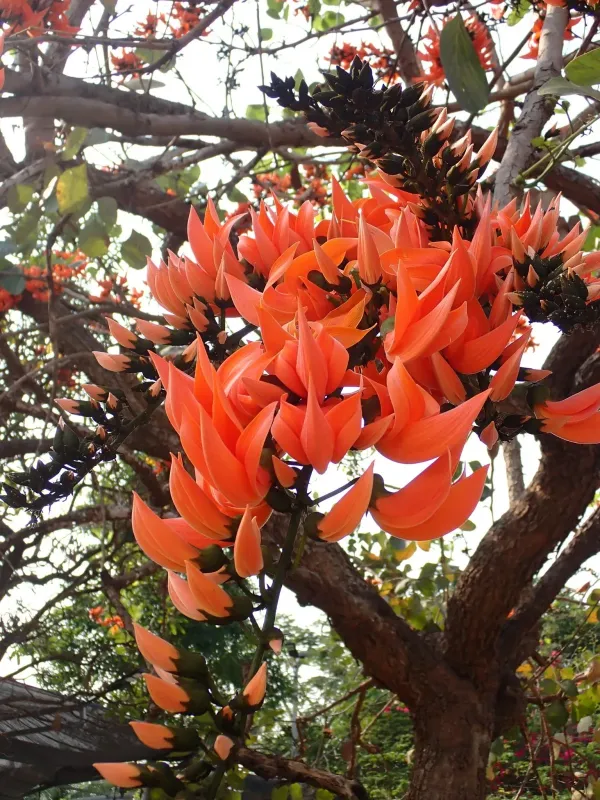
Description
Sowing dates
Butea monosperma is primarily propagated through seeds, which should be collected as soon as they reach maturity. Due to their relatively short viability, timely sowing in a nutrient-rich potting medium is highly recommended for success.
Prior to planting, soaking the seeds in warm water for 12 to 24 hours helps to break their dormancy and significantly increases the germination rate. Seeds are typically placed in individual containers to minimize root disturbance during transplantation.
The optimal time for transferring seedlings to the open field is at the onset of the monsoon season. This provides the young trees with sufficient moisture to establish a robust root system before the onset of the dry season.
Spacing is a critical factor for plantation health; trees should be planted at intervals of at least 5–7 meters to allow for canopy expansion and proper ventilation, which reduces the risk of fungal infections.
Young plants require supplemental irrigation during the first two years of growth. Once established, they exhibit significant drought tolerance and can thrive with minimal human intervention.
Growing requirements
As a member of the Fabaceae family, Butea monosperma is well-adapted to tropical and subtropical climates. It is highly valued for its ability to grow in challenging conditions, including rocky and saline soils.
The tree thrives in full sun exposure. While it can tolerate partial shade during its initial growth phase, it requires significant solar radiation to support its characteristic vibrant flowering and resin production.
Soil drainage is perhaps the most critical requirement for this species. It does not tolerate waterlogged conditions, which lead to root rot and stunted growth; therefore, well-draining loamy or sandy soils are ideal.
Temperature range is broad, though the tree performs best in environments where temperatures stay above 25 degrees Celsius. It is relatively frost-sensitive and should not be planted in areas prone to freezing temperatures.
This species is remarkably resilient and often grows in poor-quality soils where other commercial crops would fail, making it a valuable plant for land reclamation projects.
Yield
The most famous product of Butea monosperma is lac, a natural resin secreted by the lac insect (Laccifer lacca). This resin is harvested from the branches and is widely used in the dye, cosmetic, and finishing industries.
The timber obtained from the tree is durable and resistant to water, making it a suitable material for construction in humid environments and for crafting traditional tools.
The flowers are highly prized in traditional medicine and are also used to produce a natural yellow-to-orange dye. Furthermore, they are excellent sources of nectar, supporting local apiculture and honey production.
Seeds of the plant contain essential oils that have therapeutic applications. When processed correctly, these oils provide an additional revenue stream for farmers cultivating the plant.
The multifaceted nature of the tree ensures economic stability, as different parts of the plant can be harvested at different times of the year, providing a consistent source of income.
Main diseases and pests
Fungal diseases are the primary threat to plantation health, especially during prolonged periods of high humidity. Regular canopy thinning is essential to maintain airflow and prevent moisture accumulation.
Various insect pests, including bark borers and leaf-eating larvae, can cause significant damage to young trees. Integrated pest management, focusing on biological controls, is preferred to protect the tree's health.
Root rot caused by poor soil drainage remains a major risk. Ensuring the landscape has adequate slope and drainage pathways is the best preventative measure against this silent killer.
Over-harvesting of branches for lac production can weaken the tree if not managed correctly. Sustainable harvesting practices that allow the tree to recover are necessary for long-term viability.
General maintenance, such as removing dead or diseased branches, is vital to prevent the spread of pathogens throughout the orchard and to promote vigorous growth for the next season.
Harvesting
Harvesting flowers for medicinal or dye purposes is done manually during the peak of the blooming season. The flowers are then air-dried in shaded, ventilated areas to maintain their chemical potency and pigment quality.
Lac harvesting involves the strategic collection of resin-covered twigs. This process requires precise timing to ensure the lac insects have completed their cycle and that the yield is of high purity.
Seed harvesting is conducted when the pods turn brown and start to dehisce. The seeds are collected, dried, and cleaned of debris to ensure high-quality storage and optimal viability for future planting.
Sustainable bark harvesting is occasionally practiced for fiber production, but it must be performed with extreme care to avoid girdling the tree, which would result in its death.
Post-harvest processing focuses on moisture control and storage in cool, dry areas to protect the biological integrity of the harvested plant components before they are sent to market.