
Kidney vetch
Anthyllis vulneraria L.
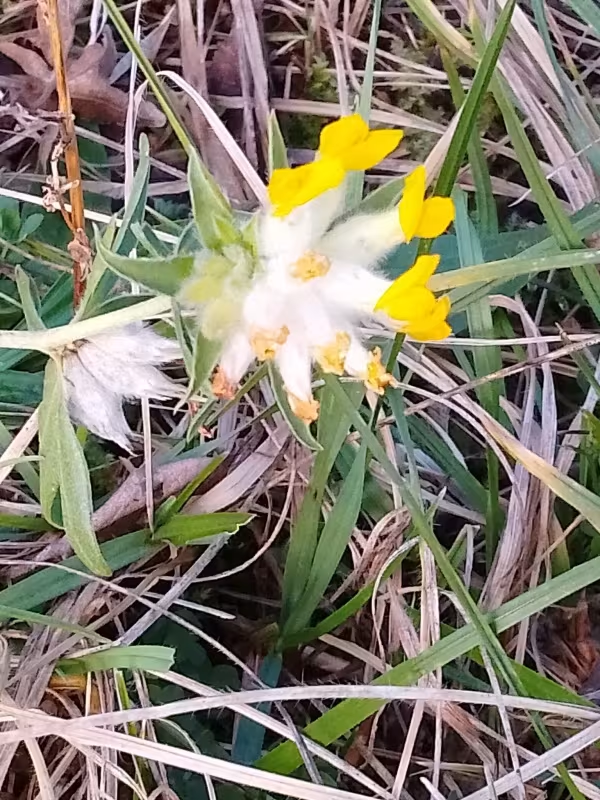
Description
Sowing dates
Kidney vetch (Anthyllis vulneraria) is a perennial legume species. Sowing is typically carried out in early spring as soon as soil temperatures reach 5–8 degrees Celsius, which allows the crop to take full advantage of winter moisture reserves.
The seeding rate varies depending on the planting method: for standard drill seeding, it is approximately 12–15 kg per hectare. Overseeding under small grain crops is also practiced to prevent the seedlings from drying out during the initial growth phase.
The seeding depth should be maintained at 2–3 cm in sandy soils, while in heavier or loamy soils, it is reduced to 1–2 cm. Ensuring firm contact between the seed and the soil is essential for uniform germination.
When used in seed mixtures, the seeding rate is adjusted according to the competition from other species. In its first year, the plant develops slowly, forming primarily a basal rosette of leaves.
For improved emergence and higher germination vigor, it is recommended to perform seed preparation, including cleaning and quality testing in laboratory settings before sowing.
Growing requirements
Kidney vetch is characterized by high drought resistance and winter hardiness. It thrives in regions with temperate climates, preferring sunny locations with good natural drainage.
The crop is not demanding regarding soil quality, making it an excellent choice for reclaiming eroded, nutrient-poor, or stony lands. The plant grows well in alkaline or neutral soils containing lime.
Optimal conditions for kidney vetch development are found in sandy loam and light loamy soils. It does not tolerate waterlogging or stagnant water, so sites with a high water table are unsuitable for cultivation.
The plant possesses a well-developed root system that penetrates deep into the soil, providing nutrients and water even during dry seasons. This property makes it essential for improving fodder resources in steppe zones.
Due to its ability to form a symbiotic relationship with nitrogen-fixing bacteria, kidney vetch does not require high doses of nitrogen fertilizers, as it actively enriches the soil with organic nitrogen.
Yield
The biomass yield of kidney vetch depends directly on soil fertility and management practices. In favorable conditions, the yield can reach 15–25 tonnes of green matter per hectare per season.
For hay production, the dry matter yield is typically about 3–5 tonnes per hectare. The crop provides two full cuts given sufficient moisture, providing the farm with high-protein fodder.
The nutritional value of kidney vetch remains consistently high even during the flowering phase, which allows for flexible harvesting windows without significant loss of fodder quality. This sets it apart from many other legumes.
To maximize yields, it is important to apply phosphate-potassium fertilizers during early growth stages. These nutrients stimulate the development of the root system and reproductive organs.
The productivity of the crop is increased when regularly used in perennial grass mixtures with cereals, which helps create a long-lived and high-yielding sward.
Main diseases and pests
The primary pests affecting kidney vetch are various species of weevils, which can damage both the vegetative parts of the plant and the seeds within the pods. Control involves crop rotation and timely harvesting.
Among diseases, powdery mildew and various leaf spot fungi are most common, developing under high humidity and improper sowing techniques.
Root rots can occur in waterlogged areas, causing premature wilting and loss of individual plants. Preventing water stagnation is a key protective measure.
To reduce pathogen risks, it is recommended to use high-quality seeds treated with fungicides before planting. This significantly improves field emergence and seedling resistance.
Preventive measures include maintaining optimal stand density to avoid overcrowding, which creates a favorable microclimate for the development of fungal pathogens.
Harvesting
Harvesting kidney vetch for hay is conducted during the full flowering phase when the nutrient content in leaves and stems is at its peak. During this period, the plant has the best digestibility for livestock.
When intended for green fodder, mowing begins before the onset of full flowering. This encourages better regrowth and allows for a second cut that is richer in leaves.
It is important to ensure that the mowing height is not too low (at least 5–7 cm) to avoid weakening the plants and ensuring their persistence in the sward for subsequent years.
For seed production, harvesting is performed when the majority of the pods turn brown to minimize losses from seed shattering. A two-stage harvesting method with preliminary windrowing is commonly used.
Post-harvest seed processing includes drying and cleaning using specialized machinery. Properly dried seeds can be stored for several years without significant loss of germination quality.