
Amphimas ferrugineus
Amphimas ferrugineus
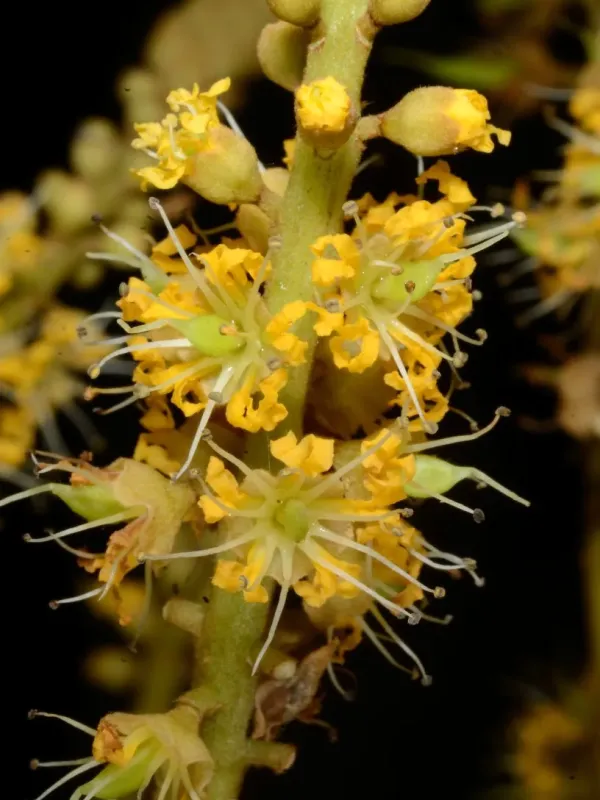
Description
Growing requirements
Amphimas ferrugineus is a large deciduous tree belonging to the Fabaceae family. It is native to the rainforests and semi-deciduous forests of West and Central Africa, playing a vital role in tropical ecosystem biodiversity.
The tree thrives in deep, fertile soils that provide excellent drainage. It requires a humid tropical climate with minimal seasonal temperature variation to reach its full growth potential and develop a straight, healthy trunk.
Light requirements are significant for young specimens, which exhibit rapid growth when exposed to adequate sunlight. In nursery settings, providing balanced shading and light management is essential to prevent etiolation and promote structural integrity.
Soil management plays a crucial role in cultivating this species. As a legume, it fixes atmospheric nitrogen, which enhances soil fertility. This makes it an excellent choice for agroforestry systems aimed at soil rejuvenation and restoration.
The botanical structure of the tree includes a complex canopy and deep root system, which helps stabilize slopes and improve soil moisture retention, contributing to the overall health of the micro-habitat where it is cultivated.
Yield
The primary economic output of Amphimas ferrugineus is its high-quality timber. The wood is esteemed for its durability, medium density, and attractive grain, making it highly sought after for furniture making and interior design.
Harvesting efficiency is achieved through sustainable silviculture practices. When grown in controlled plantations, the tree can reach harvestable dimensions within several decades, provided that competition from invasive species is minimized.
Beyond timber, the species contributes to the economy through its medicinal bark, which is traditionally harvested and processed for health purposes. This secondary use provides additional value to local forest communities.
Productivity is optimized when plantation density is balanced to allow adequate canopy development. Overcrowding can lead to poor stem quality, whereas proper spacing ensures the straight, cylindrical trunks preferred by the industry.
Future potential lies in the domestication of specific provenances that show superior growth rates and resilience to changing environmental conditions, supporting the long-term sustainability of tropical timber supply chains.
Main diseases and pests
Major threats to Amphimas ferrugineus include fungal pathogens that exploit humid conditions to colonize root systems and wounded bark. Early detection and pruning of damaged branches are essential mitigation strategies.
Boring insects represent a significant challenge for plantation forestry. These pests create internal tunnels that diminish timber quality, necessitating integrated pest management programs that utilize natural predators and biological controls.
Habitat loss due to land conversion for agriculture remains the most critical threat to the species. Protecting natural stands is essential for preserving the genetic pool necessary for the continued success of managed plantations.
Climate-induced stressors, such as prolonged droughts, can weaken tree resistance, making them more susceptible to opportunistic diseases. Irrigation during the establishment phase is vital for seedling survival.
Effective management requires a proactive approach, including regular health assessments and the promotion of diverse forest mosaics that naturally resist the widespread outbreak of species-specific pests.