
Amherstia nobilis
Amherstia nobilis
Description
Growing requirements
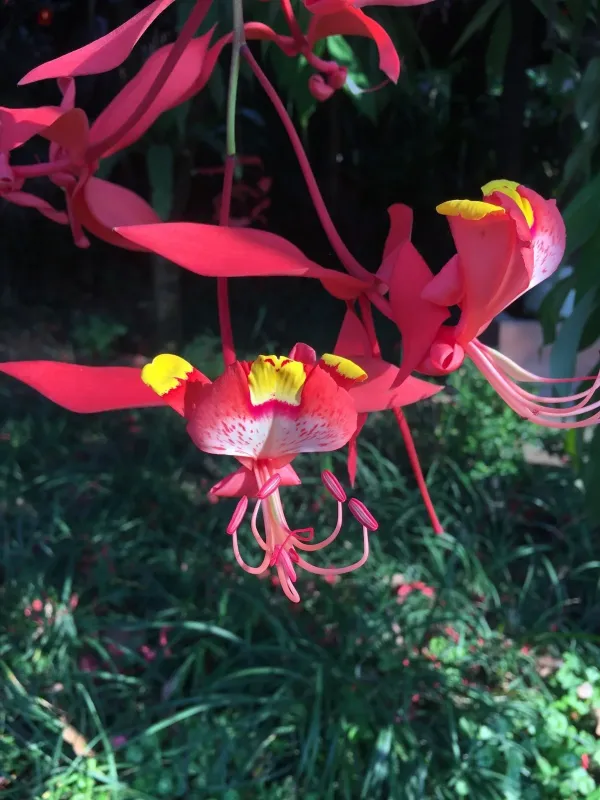
Amherstia nobilis, widely known as the Pride of Burma, is a spectacular flowering tree belonging to the Fabaceae family. It is renowned for its drooping racemes of large, vibrant red-and-yellow flowers, which are considered among the most beautiful in the plant kingdom.
The species originates from the tropical rainforests of Myanmar. Due to its specific biological needs, it thrives only in frost-free tropical or subtropical climates, requiring high humidity and constant warm temperatures to maintain its metabolic activity throughout the year.
For successful cultivation, the tree requires deep, fertile, and well-draining soil. It is highly sensitive to soil compaction and waterlogging, so providing a loose, organic-rich substrate is vital for the development of its extensive root system in container or landscape settings.
Regarding light requirements, Amherstia nobilis prefers a position in dappled shade or indirect bright light. While it is a tropical plant, excessive direct sunlight can scorch the tender new foliage, which is uniquely characterized by its striking copper-pink color before maturing.
Cultivation management involves consistent irrigation to ensure the soil remains moist but not saturated. Regular applications of balanced fertilizers are recommended during the growing season to support the intensive flowering process that is characteristic of this majestic species.
Main diseases and pests
In artificial environments, the plant is susceptible to common pests such as aphids and mealybugs, which tend to congregate on the soft new growth. Biological control methods or insecticidal soaps are usually sufficient to manage these infestations effectively.
Root rot, often caused by Phytophthora species, remains the primary threat to Amherstia nobilis, especially when soil drainage is compromised. To prevent this, strict adherence to a watering schedule and ensuring excellent aeration in the planting medium are critical.