
Yellow bird's-nest
Monotropa hypopitys
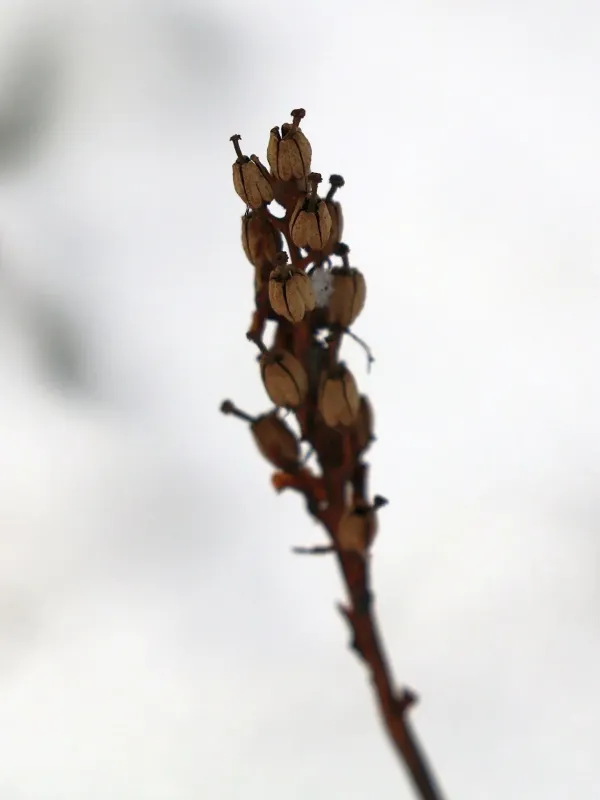
Description
Growing requirements
The yellow bird's-nest (Monotropa hypopitys) is a fascinating plant belonging to the Ericaceae family. It is well-known for its mycoheterotrophic lifestyle, meaning it does not perform photosynthesis. Instead, it derives all its nutrients by forming a complex parasitic relationship with mycorrhizal fungi associated with the roots of host trees.
The plant's natural range covers temperate regions across the Northern Hemisphere. It is exclusively found in shaded, undisturbed forest environments where the soil is rich in organic matter and maintains a specific fungal network. It cannot survive in standard agricultural fields because it lacks the ability to manufacture its own energy through sunlight.
Botanically, the plant consists of a fleshy stem without green leaves, often reaching a height of 10 to 30 centimeters. The leaves are reduced to simple scales along the stalk. The flowers appear in drooping racemes that turn upright as the seed capsules mature, a mechanism designed to facilitate wind dispersal in the sheltered forest understory.
From an agronomical perspective, this species cannot be grown as a traditional crop. It has strict requirements for soil acidity, moisture, and, most importantly, the presence of specific fungal partners. Any attempt to cultivate it outside of its natural habitat leads to rapid plant death, making it unsuitable for domestication or commercial production.
The plant has been used in folk medicine to treat various conditions, including mild nervous system disorders, though it is not a subject of agricultural trade. Its primary value lies in its ecological role as an indicator of ancient, well-preserved forest ecosystems. Conservation efforts emphasize protecting its habitat rather than attempting to cultivate it.