
Monotropa uniflora
Monotropa uniflora
Description
Growing requirements
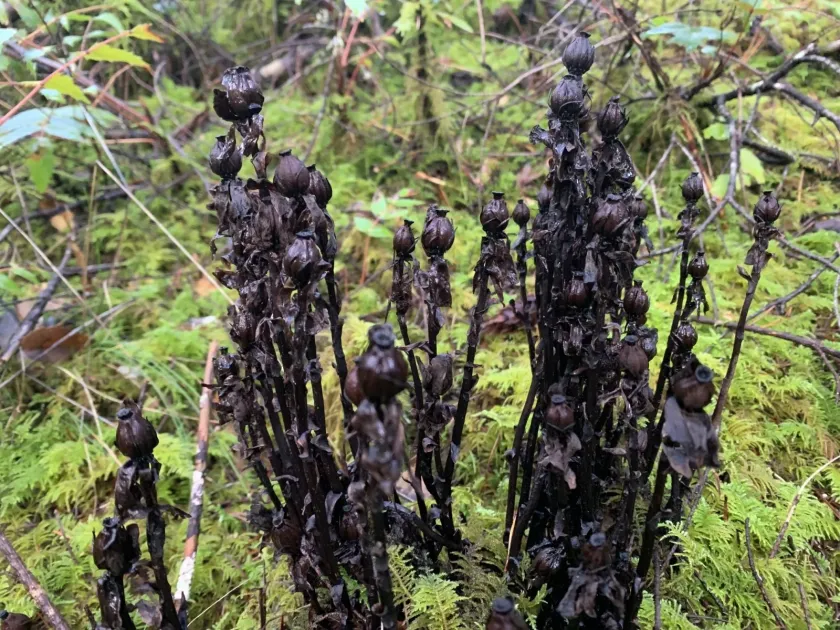
Monotropa uniflora, commonly known as the ghost plant, belongs to the Ericaceae family. It is a unique myco-heterotrophic plant that lacks chlorophyll entirely, making it incapable of photosynthesis.
Its life cycle is strictly dependent on a symbiotic relationship with specific fungi, which in turn form mycorrhizae with the roots of host trees. Through this fungal network, the plant obtains the carbohydrates and nutrients it needs to survive, effectively siphoning them from the host tree.
The natural habitat of this species spans the temperate zones of North America, Eastern Asia, and northern parts of South America. It prefers shady, moist environments within coniferous or deciduous forests where there is a deep layer of leaf litter.
It must be clearly stated that Monotropa uniflora is not an agricultural crop. It cannot be cultivated, farmed, or introduced into commercial agriculture due to its extremely specialized and rigid biological requirements regarding soil micro-ecology and specific fungal symbionts.
Environmental requirements include high humidity, a stable fungal ecosystem, and total avoidance of direct sunlight. Attempts to cultivate this plant in artificial settings, such as gardens or greenhouses, invariably fail because replicating the complex subterranean mycorrhizal network is currently impossible.
Main diseases and pests
The primary threat to this species is the destruction of its natural habitat, particularly deforestation and the disruption of the delicate fungal mycelial networks within the forest floor.
As it is not an agricultural crop, the plant does not face typical agricultural pests or diseases. However, it is exceptionally sensitive to fluctuations in soil pH and moisture levels, which can easily cause the collapse of a local colony.