
Leucopogon fasciculatus
Leucopogon fasciculatus
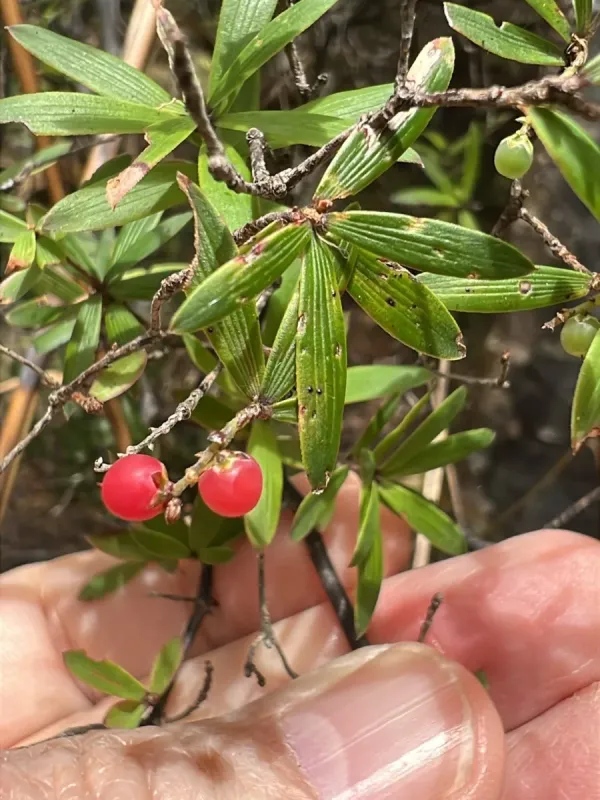
Description
Growing requirements
Leucopogon fasciculatus is an evergreen shrub species native to New Zealand, classified within the Ericaceae family. It is widely recognized for its resilience and ability to thrive in diverse ecological niches.
The plant performs best in well-draining soils with low nutrient content. It is well-adapted to rocky or sandy soils, which are typical of its natural habitat in coastal and lowland regions.
Optimal growth conditions involve exposure to full sun, though the species exhibits good shade tolerance. It requires minimal irrigation once established, being highly adapted to fluctuating climatic conditions.
Botanically, it is characterized by its stiff, fascicled leaves and small, white, bell-shaped flowers produced in spring. These structures allow the plant to minimize water loss, making it a drought-resistant cultivar.
In terms of usage, it is primarily employed in sustainable landscaping and ecosystem restoration projects, offering structural beauty and ecological value to local environments.
Main diseases and pests
Root rot caused by waterlogging is the primary threat to this species, necessitating careful site selection and adequate soil drainage during the establishment phase.
Pests such as mealybugs and scale insects may infest the foliage, particularly in nurseries where air circulation is restricted or humidity levels are overly high.
Chlorosis may occur if the soil pH becomes too alkaline, impacting the shrub's ability to absorb essential micronutrients from the growing medium.
Managing competing weeds is crucial during the juvenile stage of the plant, as the slow initial growth rate makes it vulnerable to aggressive neighboring vegetation.
Integrated pest management, focusing on proper spacing and regular sanitation, is generally sufficient to maintain healthy populations without excessive chemical use.