
Hibbertia racemosa
Hibbertia racemosa (Endl.) Gilg
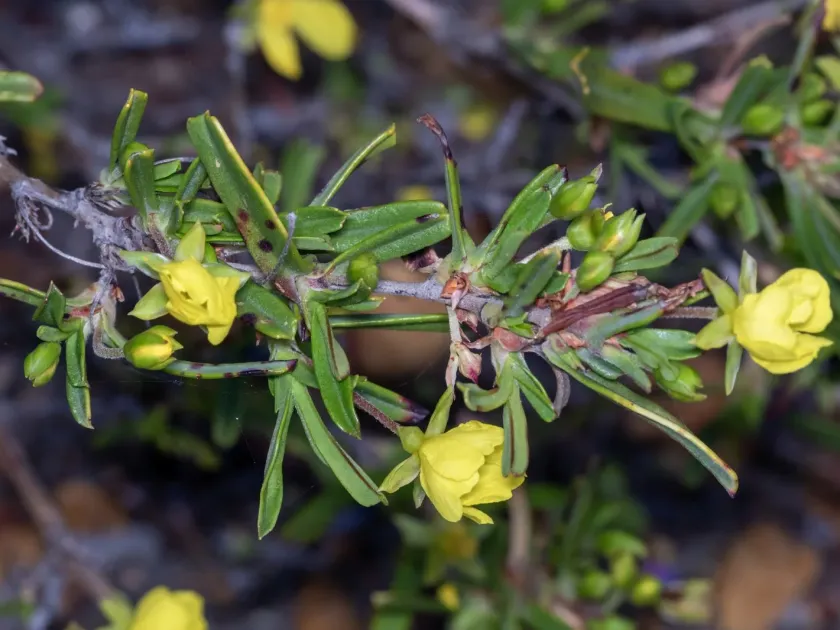
Description
Growing requirements
Hibbertia racemosa is an evergreen shrub belonging to the family Dilleniaceae. This species is well-known for its dense foliage and vibrant yellow flowers, making it a popular choice for specialized ornamental gardens.
The plant originates from the southwestern part of Australia, where it is adapted to thrive in Mediterranean-like climatic conditions. It typically inhabits sandy, well-drained soils found in heathland environments.
Cultivation requirements include a sunny location with exposure to direct light for several hours a day. The soil must be slightly acidic to neutral and possess excellent drainage to prevent the accumulation of moisture around the root zone.
Agrotechnical practices involve careful monitoring of water levels during the growing season. While the plant shows moderate drought tolerance, regular irrigation is beneficial for maintaining optimal growth and maximizing flower production.
In landscape design, this shrub is utilized for its architectural shape and aesthetic appeal. It is commonly found in gardens that mimic natural Australian ecosystems, providing both ecological value and visual beauty.
Main diseases and pests
The primary threats to Hibbertia racemosa are root pathogens, which typically manifest in poorly drained soils. Excess moisture creates an ideal environment for fungi that compromise the plant's structural integrity.
Common pests affecting this species include spider mites and mealybugs, which are particularly troublesome when the plant is kept in containers or areas with restricted airflow and high humidity.
Management of these threats centers on preventative care. Ensuring a well-aerated soil structure and maintaining a consistent, moderate moisture regime significantly reduces the risk of infestation and disease.
Chemical control should be employed with caution. Using targeted insecticides and fungicides according to the manufacturer's instructions is necessary only after visual confirmation of pests or necrotic lesions.
Periodic pruning is an essential maintenance practice that improves ventilation throughout the crown, thereby reducing the localized humidity that attracts pests and promotes fungal growth.